Safety review updated July 2026 | Educational information, not medical advice
Breast and chest bondage is not risk-free. Rope or straps placed around the torso can create pressure on skin and soft tissue, compress nerves, affect circulation or make breathing harder. This page is a risk-awareness guide, not a tying tutorial. It does not teach knots, suspension or chest-compression techniques.
If you choose to explore rope, use an experienced, consent-focused educator for hands-on instruction. Do not practise chest restraint alone, do not leave a restrained person unattended and never use a decorative tie or fashion harness for suspension.
Quick safety answer
- Consent must be clear, informed, ongoing and revocable. Agree on the activity and limits before starting, continue checking in and stop when anyone withdraws consent or cannot communicate reliably.
- Breathing comes first. Stop and release pressure immediately if breathing becomes difficult, painful, unusually fast or shallow, or if the person cannot speak normally.
- Numbness is not a goal. Tingling, burning, electric pain, loss of sensation or weakness may indicate nerve compression. Do not wait for a color change before responding.
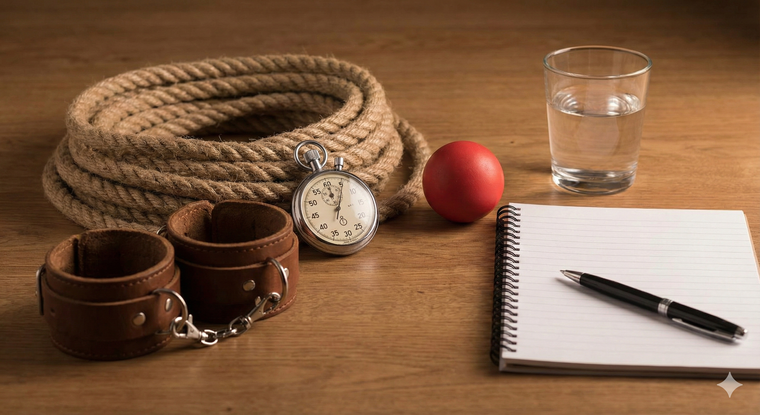
- There is no universal safe time limit. Risk depends on pressure, placement, movement, body position, health, communication and many other factors. A timer cannot prove that a tie is safe.
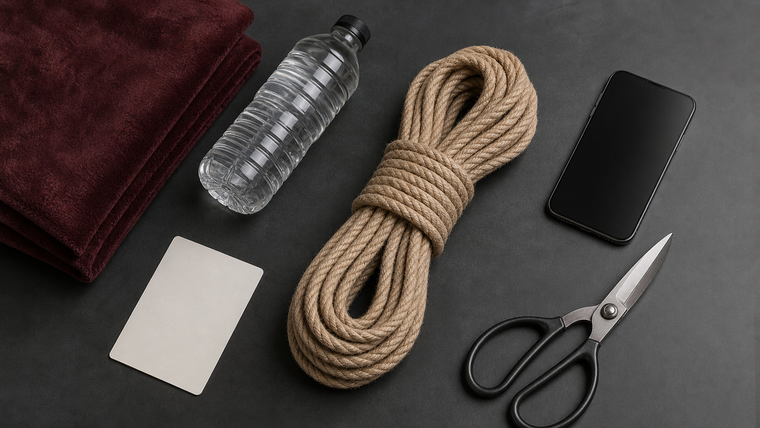
- Have an immediate release plan. Keep suitable safety shears within reach, know how the person will be released and avoid any setup that cannot be removed promptly.
Before any chest or breast bondage
Confirm consent and capacity
Discuss what is proposed, what is off-limits, possible marks, privacy, how to pause, how to stop and what aftercare is wanted. RAINN describes consent as clear, voluntary and ongoing; consent to one activity is not blanket permission for another and it can be withdrawn at any time.
All participants must be adults who can freely make and communicate a decision. Do not proceed when someone is asleep, coerced, seriously impaired, or unable to understand the activity and its foreseeable risks. A safeword is useful only when a stop is respected; silence, freezing, confusion or loss of responsiveness also means stop.
Check personal health factors
Chest pressure can be a poor choice for some people. Ask a qualified clinician before participating if pregnancy or breastfeeding, recent chest or breast surgery, implants or reconstruction, current breast or chest pain or injury, reduced sensation, a nerve or circulation disorder, or a breathing or heart condition could be relevant. This is not an exhaustive contraindication list, and an internet article cannot assess an individual's risk.
Plan release before restraint
- Keep safety shears immediately accessible to the person responsible for release.
- Agree on spoken and nonverbal stop signals before starting.
- Make sure the person can be released without searching for a tool, key or tutorial.
- Use a stable, uncluttered environment and avoid positions where a fall cannot be prevented.
- Do not combine chest bondage with neck pressure, airway restriction, intoxication, sleep, driving or any situation in which monitoring is interrupted.
- Do not suspend from the chest, a fashion harness or a technique learned from this article.
Understand the main warning signs
Nerve compression
Nerve compression can cause pain, numbness, tingling, burning or weakness. Cleveland Clinic advises getting medical help sooner rather than later when compression symptoms begin because severe compression can cause lasting problems. A published clinical report also documents acute compression neuropathies associated with Japanese rope-bondage suspension; it was a small exploratory case series, so it does not establish a universal rate or a safe exposure time.
What to do: stop and remove the pressure immediately. Do not tighten, reposition and continue through numbness, unusual tingling, electric or burning pain, weakness or loss of movement. If weakness, loss of sensation or pain persists after release, seek prompt medical evaluation and explain honestly that compression from rope or restraint occurred.
Circulation and tissue pressure
Appearance alone is not a dependable safety test. Skin tone changes vary between people and lighting can hide them; a person may also find it harder to notice a nerve problem when an area is numb. Monitor comfort, sensation, movement, temperature, swelling and communication together, and release at the first concerning change.
Remove pressure if there is increasing swelling, unusual coldness, marked paleness, blue or gray coloration, escalating pain or loss of normal sensation. Persistent swelling, color change, pain or altered sensation needs medical assessment.
Breathing and chest symptoms
Do not place pressure around the neck or use restraint to limit breathing. The American Red Cross lists gasping, inability to get enough air, inability to speak normally, abnormal breathing, gray or bluish skin and unresponsiveness among signs that can require immediate emergency treatment.
Call local emergency services immediately for severe difficulty breathing, gasping or choking, chest pain or tightness, very pale, blue or gray lips or skin, sudden confusion, fainting, unresponsiveness or loss of normal movement. Mayo Clinic likewise advises emergency help for sudden or unexplained chest pain, trouble breathing or loss of consciousness. Do not try to diagnose the cause yourself.
Monitoring during a scene
Active monitoring is continuous, not a check every fixed number of minutes. Stay close enough to observe and communicate, and ask specific questions such as whether breathing feels normal and whether there is any tingling, numbness, burning, weakness or unusual pain. A person should be able to answer clearly and move as expected.
Stop if communication changes, a participant becomes confused or unusually quiet, the restraint shifts, pressure increases with movement, or anyone is uncertain. Excitement can make people minimize symptoms; the safer response is to release first and reassess afterward.
Why a “30-minute rule” is misleading
No single number can account for pressure, position, anatomy, health, movement and material. The previous version of this page gave beginners a 30-minute limit; we removed it because a countdown can create false reassurance. Clinical reports of rope-related nerve injury include symptoms after comparatively brief suspension, while community safety resources also emphasize that tolerance varies by location and person. A time limit is not a substitute for training, conservative choices and continuous monitoring.
After release
- Check breathing, alertness, skin, sensation and normal movement.
- Ask about pain, tingling, numbness, weakness, dizziness and any new chest symptoms.
- Continue observing rather than assuming that removal ends every risk.
- Seek prompt medical care for symptoms that persist, return or worsen.
- Call local emergency services for any emergency warning sign listed above.
When speaking with a clinician, describe where pressure was applied, what symptoms occurred and when they began. Accurate information helps the clinician assess the injury; embarrassment should not delay care.
Lower-risk ways to explore the visual style
If the goal is an outfit rather than restraint, an adjustable fashion piece may offer the framed-chest look without learning a rope tie. Lunarness chest harnesses and body harnesses are fashion accessories, not medical or safety devices. They are not rated for restraint, load-bearing or suspension, and they should not be worn tight enough to cause pain, numbness or breathing difficulty.
For consent and communication principles that apply beyond rope, read our BDSM relationship and communication guide. That page is also educational and does not replace professional advice.
Frequently asked questions
Is breast bondage safe?
It cannot be described as risk-free or guaranteed safe. Risk varies with the people, pressure, placement, position, health and response to changing symptoms. In-person education, explicit consent, conservative choices, continuous monitoring and immediate release capability can reduce risk, but they cannot eliminate it.
What rope is safest for chest bondage?
No rope material makes a technique automatically safe. Diameter, construction, condition, friction and how pressure is distributed all matter, but material choice does not replace anatomy knowledge or supervised instruction. This page does not recommend a material or teach a chest tie.
Should beginners practise on themselves?
No. Solo restraint removes the independent person who can monitor, respond to a medical problem and release the tie if something goes wrong. This guide does not recommend self-bondage.
Is skin color enough to check circulation?
No. Color can be difficult to judge across skin tones and lighting, and it does not rule out nerve compression. Consider sensation, movement, temperature, swelling, pain, breathing and communication together, and release when any concerning change appears.
Sources and further reading
- RAINN: Consent 101
- Cleveland Clinic: Nerve compression syndromes
- Khodulev et al.: Acute radial compressive neuropathy associated with Japanese rope bondage
- American Red Cross: Respiratory distress signs and emergency steps
- Mayo Clinic: Chest pain first aid
- Rope365: Rope safety and risk awareness
Disclaimer: This guide is educational and is not medical advice, diagnosis, first-aid certification or hands-on rope instruction. It cannot evaluate an individual situation. If symptoms are severe or you are unsure whether an emergency is occurring, contact local emergency services.