Safety review updated July 2026 | Educational information, not medical advice or a tying tutorial
Male shibari is rope bondage involving a man or masculine participant. It can be explored as art, intimacy, performance or consensual power exchange, but the label does not make a particular tie suitable for a particular body. Shoulder mobility, muscle mass, body shape, sensation, prior injury, health and comfort vary from person to person.
This guide does not teach ties, body loading, suspension or self-bondage. It replaces a short article that prescribed rope diameters, lengths and quantities; recommended behind-the-back arm ties and suspension preparation; and told beginners to practise on themselves. Those instructions could create false confidence without hands-on assessment or an independent rescuer.
Quick answer: what changes for male shibari?
- Start with the individual, not a gender template. There is no universal male rope pattern or standard rope quantity.
- Consent must be specific and ongoing. Agreeing to rope does not imply agreement to pain, exposure, photography, genital contact, restrictive positions or suspension.
- Appearance is not a safety test. A broad or muscular body can still experience nerve compression, loss of circulation, joint injury or breathing difficulty.
- Numbness and weakness are stop signals. Do not treat them as normal sensations to endure.
- Self-tying is not a beginner shortcut. An absent independent rescuer can turn a correctable problem into an emergency.
- Suspension requires specialist in-person education. This page provides no suspension, anchor or load-bearing guidance.
Why gender-based tying rules are unreliable
The previous page said male bodies need longer rope because they are broader, that male chests have less padding and that the radial nerve is more exposed in male arms. These statements flatten wide individual differences into a gender rule. Some men have broad shoulders or a flat chest; others do not. Trans men, nonbinary people and people with surgery, implants, scars or hormone-related body changes may have needs that cannot be inferred from a label.
A responsible assessment asks about the actual person's comfortable range of motion, prior injuries, altered sensation, breathing, circulation, medications and boundaries. It does not assume flexibility from appearance or compare someone with a supposed male or female standard. No general article can clear an individual for restraint.
Main risks to understand
Nerve compression and stretch
Pressure or an extreme joint position can affect a nerve even when the skin initially looks normal. Cleveland Clinic lists numbness, pain, tingling and muscle weakness among nerve-compression symptoms. A published clinical case series describes acute compression neuropathies associated with Japanese rope-bondage suspension, including sensory loss and weakness. The series is small and does not define a safe rope, position, pressure or duration.
Stop and remove pressure for numbness, tingling, burning, electric pain, unusual coldness, weakness or loss of normal movement. Do not simply loosen one strand and continue. Symptoms that persist or worsen need prompt medical assessment.
Circulation changes
Swelling, unusual temperature, escalating pain, loss of sensation or a marked color change may indicate a problem. Skin color alone is not a reliable monitoring system: lighting, skin tone and rope placement can make change difficult to judge, while nerve symptoms can occur without dramatic discoloration. Monitor the participant's report, movement, strength, sensation and temperature together.
Joint and position stress
Behind-the-back arm positions can place significant demand on shoulders, elbows and wrists. A person may tolerate a position while unrestrained yet be unable to move out of it once rope is applied. Muscular size does not guarantee joint mobility. Pain at a joint, shaking, a sudden range-of-motion change or inability to return to a neutral position means stop.
Breathing and chest pressure
Any chest or torso restraint must leave breathing and communication unobstructed, but visual observation alone cannot guarantee that. Changed breathing, inability to speak normally, gasping, confusion, fainting, chest pain or blue, gray or very pale lips or skin requires immediate action. The American Red Cross identifies several of these as respiratory-distress signs that can require emergency treatment.
Falls and body-weight loading
Standing restraint and partial or full suspension add fall, anchor, equipment and rapidly changing load risks. Bound hands may not be available to protect the person. A nearby observer cannot always catch a sudden fall, and fashion fixtures or furniture are not verified anchors. This article does not provide a progression from floor work to suspension.
Consent and dignity in male rope spaces
RAINN describes consent as clear, voluntary, specific, ongoing and revocable. Discuss the intended activity, body areas, clothing, touch, pain, sexual contact, marks, photographs, privacy, stop signals and release plan before rope is applied. Everyone involved must be an adult who is sober, alert and free from coercion.
Men may face pressure to appear strong, tolerate pain or avoid admitting fear. Masculinity is not consent and endurance is not proof of skill. A participant can withdraw consent at any time without defending the decision. The person tying remains responsible for noticing silence, freezing, confusion, loss of responsiveness, unusual quietness or changed breathing rather than relying only on a safeword.
Gender-affirming language, dysphoria triggers, scars, prostheses, binding garments and areas a participant does not want seen or touched should be discussed respectfully. Do not ask someone to disclose more medical or identity information than is necessary for an agreed activity. Photography requires separate permission for capture, storage and sharing.
Patterns this guide does not recommend
- Self-bondage or both-hand restraint: the person may lose access to release tools or be unable to respond to fainting, panic, fire or equipment failure.
- Neck loading or breath restriction: published medical and forensic literature associates strangulation and erotic asphyxiation with severe injury and death.
- Behind-the-back box-tie copying: a familiar name or attractive image does not establish that a shoulder position or rope path is suitable.
- Genital rope from written instructions: altered sensation, swelling and circulation concerns require specific education; this page gives no technique.
- Fixed session timers: no number of minutes proves that continuing is safe.
- Suspension preparation at home: body-weight loading should not be learned by copying an online checklist.
Monitoring and release
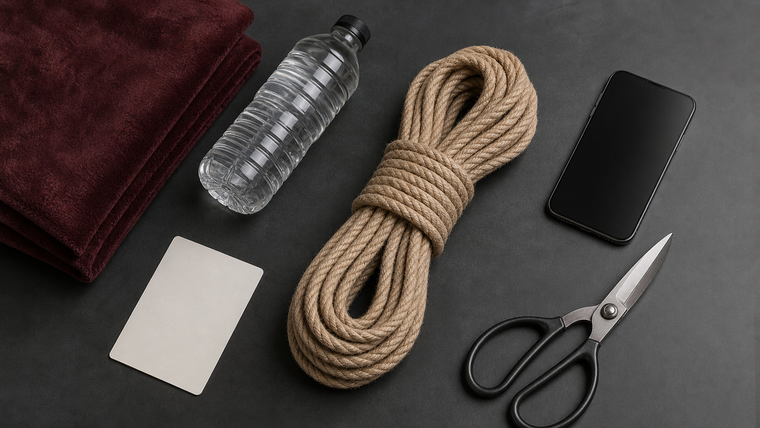
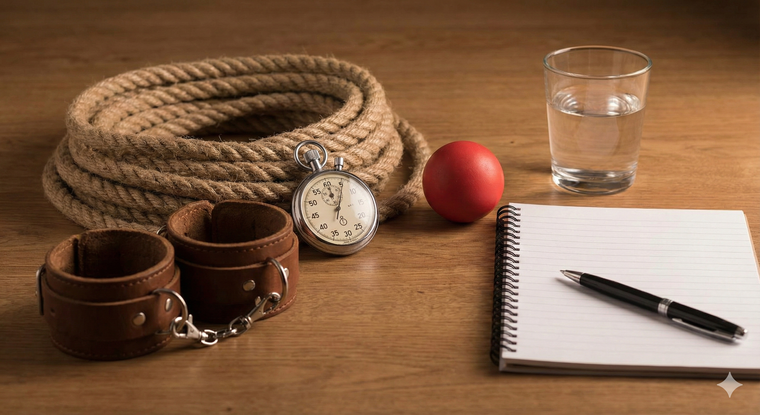
Before starting, the person controlling the rope should have an immediate release plan and suitable cutting tools that can be reached without leaving the participant. That preparation does not make a risky configuration safe. Avoid locks, delayed-release systems and any setup that depends on the restrained person rescuing themselves.
Monitor continuously, not only at timed intervals. Check speech, breathing, alertness, movement, strength, sensation, temperature, swelling, pain and the participant's report. Ask clear questions that require an answer. Release immediately when concern appears; do not reposition and continue through symptoms.
Emergency warning signs
Call local emergency services immediately for severe breathing difficulty, gasping or choking, chest pain or tightness, very pale, blue or gray lips or skin, sudden confusion, fainting, seizure-like activity, unresponsiveness or loss of normal movement. Follow the emergency dispatcher's instructions.
Persistent or worsening numbness, tingling, burning, weakness, swelling, color change or pain needs prompt medical assessment. Tell the clinician where pressure was applied and when the symptoms started. Do not massage, stretch, apply heat or ice to a suspected injury based only on a general blog article.
How to find responsible rope education
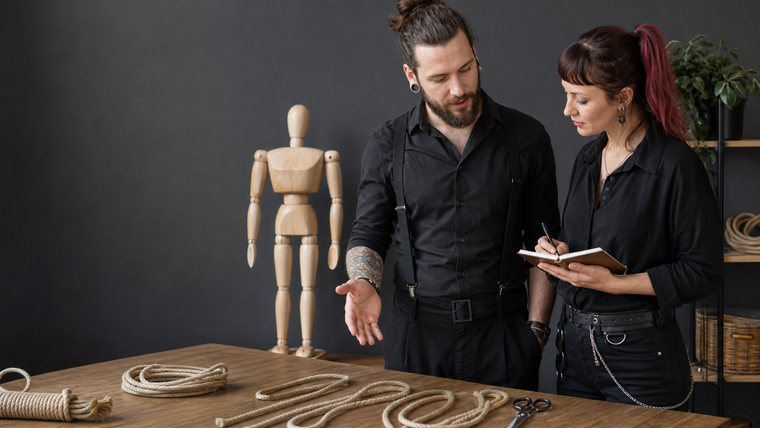
- Choose in-person teaching that covers anatomy, nerves, circulation, joint range, falls, consent, monitoring and emergency response.
- Ask whether instruction includes different body shapes, mobility levels, skin tones and gender identities rather than one idealized model.
- Observe before participating and verify that stopping a demonstration is treated as good judgment, not failure.
- Avoid educators who guarantee a tie is safe, dismiss numbness or weakness, or frame pain tolerance as proof of masculinity.
- Recognize that first-aid training improves general preparedness but does not qualify someone to design restraint or suspension.
The rigger role guide discusses responsibility and education, our bondage-position risk guide explains common position categories without teaching them, and the self-bondage safety guide explains why an absent independent rescuer is a defining hazard.
Rope-inspired fashion is not restraint equipment
A rope aesthetic can also be explored without immobilization. Lunarness men's harnesses and body harnesses are fashion accessories. They are not restraints, personal protective equipment, anchors or load-bearing suspension gear. Do not use fashion straps, rings or hardware to support body weight.
Frequently asked questions
Does male shibari require longer rope?
No gender-based length rule is reliable. The appropriate material and amount depend on the actual person, intended non-load-bearing floor activity, educator's system and release plan. This page does not prescribe rope specifications.
Is cotton rope automatically safer for beginners?
No material removes the risks of nerve pressure, joint position, circulation change, falls or delayed release. Material choice cannot substitute for consent, anatomy education, supervision and hands-on instruction.
Can a muscular person tolerate tighter rope?
No. Muscle size does not show nerve location, circulation, joint mobility or pain tolerance and should not be used to justify more pressure.
Can I practise male shibari on myself?
This guide does not recommend self-bondage. Without an independent, capable rescuer, a correctable release problem can become an emergency.
Sources and further reading
- RAINN: Consent 101
- Cleveland Clinic: Nerve compression syndromes
- Khodulev et al.: Acute compression neuropathy associated with Japanese rope bondage
- American Red Cross: Respiratory distress signs and emergency steps
- Mayo Clinic: Chest pain first aid
- Schori et al.: Literature review of fatal outcomes in BDSM play
- Stellpflug et al.: Emergency-department management of strangulation
- Rope365: Rope safety and risk awareness
- Shibari Safety: anatomy and risk education resources
Disclaimer: This article provides general risk-awareness information. It is not medical advice, first-aid certification, product certification or hands-on rope instruction. It cannot evaluate an individual situation. Contact local emergency services for severe symptoms or any situation in which immediate release is not possible.