Quick answer: Choose a waist chain when you want jewelry-led drape that can sit on the body or over a light layer. Choose a chain belt when you want a more structured waist focal point, usually anchored by a strap, larger links or a belt-like panel over clothing. Product names overlap, so compare the anchor, usable length, closure and photographed placement instead of relying on the label alone.
How this guide was reviewed: Lunarness compared the current waist and belly chain collection, chain belt collection, product galleries, closures and documented fit details. The recommendations below describe those verified constructions and do not assume that every extender, garment or styling prop is included.
Waist Chain vs Chain Belt at a Glance
| Feature | Waist chain | Chain belt |
|---|---|---|
| Main construction | Fine or layered jewelry chains | Visible strap, larger chain or belt-like anchor |
| Typical placement | Natural waist, lower belly or high hip | Over a waistband, dress, skirt or long top |
| Visual effect | Light drape, charms and body-jewelry detail | Stronger structure and a defined waist line |
| Fit priority | Finished length and comfortable drape | Usable belt range over the intended clothing |
| Best starting point | Waist and belly chains | Chain belts |
What Is the Main Difference?
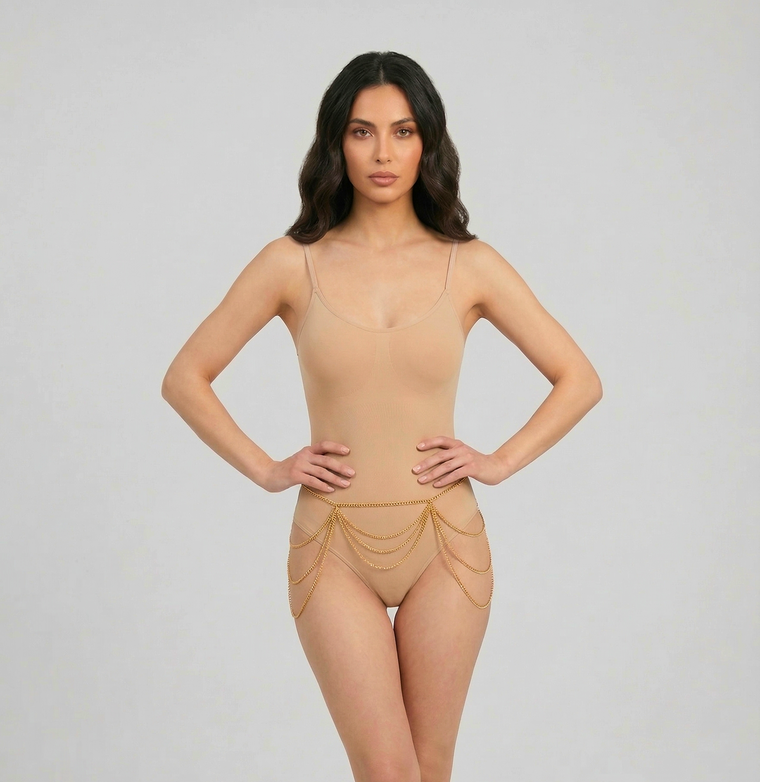
A waist chain is jewelry first. It may use one fine line, several draped tiers, charms, pearl-look details or a route that extends from the waist toward the hip or thigh. The chain itself creates the shape. It can be visible over clothing or placed against skin when the finish and fit are comfortable.
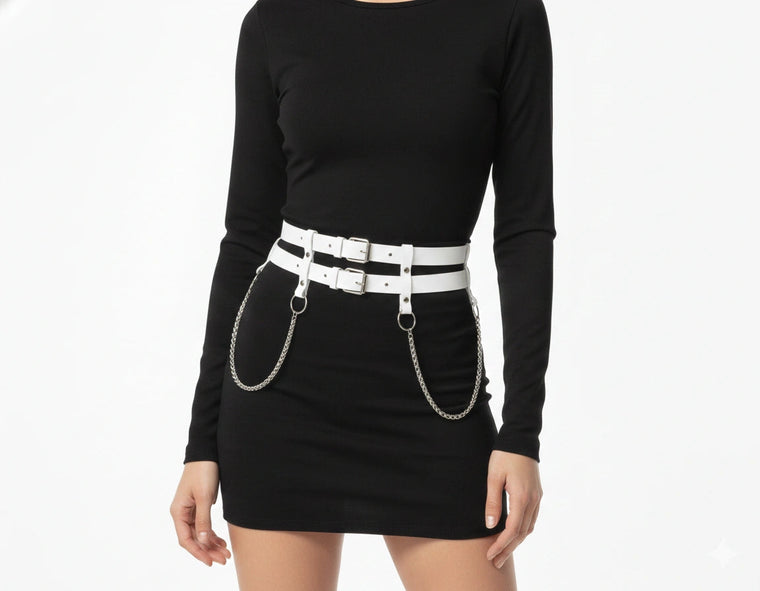
A chain belt is belt led. In the Lunarness edit, that can mean a black waist strap with silver-tone drapes, a white faux leather harness belt with hanging chains, a double-strap waist belt or a wider corset-style panel. These pieces create more structure than a fine belly chain. They are decorative fashion accessories and should not be assumed to hold trousers up unless the individual listing documents that purpose.
The words are not perfectly standardized. A product title may use both waist chain and belt because shoppers use the phrases interchangeably. The useful shopping question is simpler: Is the piece anchored like jewelry, or structured like a belt?
Choose a Waist Chain When You Want Lighter Drape
A waist chain works well when the outfit already has a clear silhouette and needs a smaller metallic detail. Fine chains can follow the natural waist over a fitted dress, sit lower over trousers, or add a jewelry line above a skirt. Layered designs create more movement, while a single chain feels quieter.
The layered silver waist chain uses several coin-charm tiers for a fuller front drape. The gold-tone layered belly chain creates a warmer multi-line effect. Use the exact product page to confirm the available length, closure and photographed finish. Gold-tone and silver-tone describe appearance, not precious-metal content.
Choose a Chain Belt When You Want More Structure
A chain belt makes sense when the waist should be the outfit's main focal point. A strap or wider panel creates a stronger horizontal line and gives hanging chains a fixed anchor. This can sharpen a plain dress, add hardware to a monochrome skirt outfit or break up a long top.
The silver chain belt with a black O-ring waist strap shows the difference clearly: the strap anchors several silver-tone drapes across the hips. The white faux leather chain belt harness uses a double waist band and hanging chains over a black dress. Check the active option and current gallery before ordering because not every selectable color has the same photographed coverage.
How to Measure for Each Style
Measure a Waist Chain at Its Final Placement
Decide whether the chain will sit at the natural waist, across the lower belly or on the high hip. Wrap a soft tape around that exact point and keep it level. Compare the number with the complete wearable range on the listing. If an extender is not shown or described, do not assume one is included.
Measure a Chain Belt over the Outfit
Put on the dress, skirt, trousers or top you plan to wear, then measure over that layer. A structured belt that fits at the natural waist may not have enough range for a lower hip placement. Check where buckles, O-rings and chain drapes land before tightening the final setting.
Test Movement, Not Only Standing Fit
Sit, bend and walk in the finished outfit. Make sure chains stay clear of zippers, pockets, belt loops, bags and delicate fabric. The piece should not pinch, pull or restrict normal movement. Decorative chain hardware is not restraint, suspension or load-bearing equipment.
Which One Works for Different Outfits?
With a Dress
Use a waist chain when you want a fine metallic line without changing the dress shape. Use a chain belt when you want to define the waist of a straight or loose dress. Keep the chain clear of lace, open knits and fragile fabric that may catch.
With Jeans or Trousers
A fine waist chain can sit above the waistband for a jewelry effect. A chain belt can create a stronger line over the waist or high hip, but it should not block the zipper or pockets. The complete chain belt styling guide covers placement with jeans, dresses and skirts in more detail.
For Festivals and Club Nights
Either style can work, but secure movement matters more than the label. A lighter waist chain supports an already detailed top, while a structured chain belt can lead a minimal black outfit. Test the complete look before the event and check current venue rules for metal accessories.
With Body Jewelry
A waist chain is part of the wider body-jewelry family. If you want the line to extend from the neck, chest or torso, compare the body chain collection and read the body, waist and belly chain fit guide. Avoid stacking several routes where fine links can tangle.
A Simple Buying Decision
- Choose a waist chain for fine links, charms, layered jewelry drape and flexible placement.
- Choose a chain belt for a stronger waist anchor, visible strap or wider panel.
- Measure at the intended position and over the intended clothing layer.
- Confirm the finish, closure, wearable range and included pieces on the exact listing.
- Use one waist focal point when nearby clothing already has chains, buckles or heavy texture.
Ready to compare products? Browse waist and belly chains for jewelry-led drapes, or shop chain belts for women for strap-led and structured styles.
Frequently Asked Questions
Is a waist chain the same as a chain belt?
Not always. A waist chain is usually jewelry-led and creates a fine or layered drape, while a chain belt usually has a stronger strap, link or panel that anchors the design over clothing. Product labels overlap, so compare construction and fit.
Can a waist chain be worn over clothes?
Yes. A waist chain can sit over a fitted dress, skirt, trousers or a smooth top. Check that fine links do not catch textured fabric and measure over the exact layer you plan to wear.
Can a chain belt replace a regular belt?
Only if the individual product page documents that function. Many fashion chain belts are decorative and are not designed to hold trousers up, so use the listing rather than the product name to decide.
How do I know what waist chain length to buy?
Measure around the exact waist, belly or high-hip position where the chain will rest. Compare that number with the listed wearable range and do not assume an extender is included unless it is shown or described.
Which is better for a dress, a waist chain or a chain belt?
A waist chain adds light jewelry detail without strongly changing the silhouette. A chain belt provides more structure and waist definition. Choose according to the dress fabric, placement and the amount of visual contrast you want.