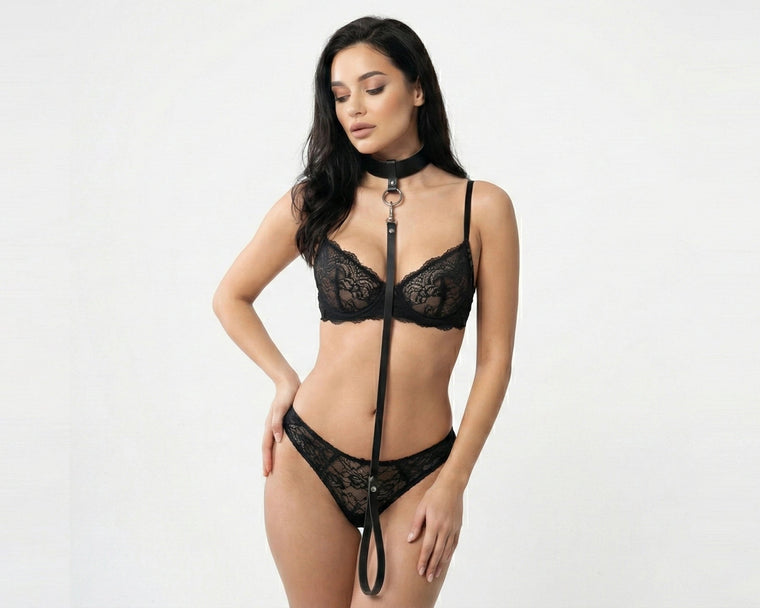
A day collar is close-fitting neckwear chosen for everyday or public-facing styling, often with a personal meaning known primarily to the wearer. It may look like a simple choker, a slim necklace, a faux leather band or a rigid metal collar. The term describes how the piece is understood and worn; it does not guarantee a specific material, closure, comfort level or safety rating.
This guide separates the informational question from the shopping decision. You will learn what a day collar can mean, how it differs from related neckwear and what to check before choosing one. If you already know the style you want, compare the current day collar collection by band shape, hardware, closure and live product measurements.
What Is a Day Collar?
In plain language, a day collar is a collar, choker or collar-style necklace intended to work in ordinary settings. Some people use one as a private symbol within a consensual relationship or power-exchange dynamic. Others wear the same type of piece as gothic, punk, pastel or minimalist fashion. A visual detail alone cannot tell you what a collar means to another person.
That context matters. An O-ring, heart ring, small lock or close-fitting band may carry personal meaning for its wearer, but none has one universal definition. Wearing a day collar does not communicate consent, availability, relationship status or permission for anyone else to touch it. When a piece is shared within a relationship, its meaning should come from an explicit conversation between the people involved.
Day Collar Meaning: Personal Symbol or Fashion Choice
A day collar can represent commitment, connection, a role within a negotiated dynamic, self-expression or simply a preferred style. Two visually identical chokers may mean very different things to their wearers. The useful question is not “What must this symbol mean?” but “What does the wearer choose for it to mean?”
For partners, a conversation can cover when the collar will be worn, who chooses it, whether it remains private, how it can be removed and what happens if the wearer changes their mind. Consent is ongoing. A collar should never be used to replace communication or to imply that one person has unrestricted authority over another.
What Is a Trad Wife Day Collar?
A trad wife day collar is an informal social-media phrase for subtle neckwear that a wearer associates with commitment or submission to a husband within a traditional-wife relationship. It usually looks like an ordinary necklace, close-fitting choker or simple pendant. It is not a standardized collar design, a historical marriage custom or a requirement of being a tradwife.
Tradwife is short for traditional wife and generally refers to a married woman who embraces traditional gender roles, often while sharing that lifestyle online. That identity is separate from BDSM and from being submissive. Some people combine those ideas in a personal relationship dynamic; many do not. A necklace cannot reveal the wearer's beliefs, private agreements or preferred relationship structure.
Why Do Some People Use This Phrase?
Some wearers use an ordinary-looking day collar as a private reminder of dedication, a chosen role or a relationship promise. Adding the words “trad wife” describes that person's interpretation, not a new product category with its own material or closure. Another wearer may choose an identical necklace purely for fashion or give it a completely different meaning.
Is It Different from a Regular Day Collar?
There is no construction standard that makes one piece a trad wife day collar. The practical checks are the same as for any day collar: usable neck measurement, band width, documented material, closure, removal method and intended wear conditions. If you prefer a refined, low-profile look, compare elegant day collars by those details rather than relying on a social-media label.
Does Wearing One Mean Consent or Ownership?
No. Relationship jewelry does not create literal or legal ownership, and it never communicates blanket consent. Any symbolism should be freely chosen and discussed by the people involved. Consent remains specific, informed, reversible and ongoing, whether the wearer describes the relationship as traditional, submissive, BDSM, none of these or something else.
Day Collar Necklace, Choker and Daytime Collar Terms
These phrases overlap, but each emphasizes a different part of the design. A day collar describes the everyday context, while necklace and choker describe the form. “Daytime collar” is a less common name for the same public-facing idea. None of these labels guarantees a particular material, closure, fit or personal meaning.
What Is a Day Collar Necklace?
A day collar necklace is subtle neckwear intended to resemble ordinary jewelry while sometimes carrying a private meaning for the wearer. It may use a slim chain, a small pendant, a close metal band or another low-profile shape. Check the documented length, material and clasp instead of assuming every necklace-style collar is suitable for continuous wear.
Is a Day Collar Choker Different?
A day collar choker emphasizes a close-fitting band rather than a hanging necklace shape. Some chokers are wide faux leather pieces with visible hardware; others are slim enough to work with everyday clothing. The current discreet O-ring day collar shows the wider choker-style silhouette.
What Does Daytime Collar Mean?
A daytime collar is another way to describe collar-style jewelry chosen for ordinary settings. The phrase does not create a separate product category. Compare the current day collars by band shape, hardware and removal method rather than choosing from the name alone.
Day Collar vs. Choker, Scene Collar and Locking Collar
These terms overlap, but they emphasize different things:
| Term | Main emphasis | What to verify |
|---|---|---|
| Day collar | Subtle or everyday-facing wear, sometimes with personal meaning | Material, fit, closure and intended wear conditions |
| Fashion choker | Visual styling at the neck | Band width, outfit pairing and comfort |
| Scene-led collar | A more overt BDSM or roleplay aesthetic | Boundaries, hardware limits and whether a chain is included |
| Locking collar | A closure that requires a key or tool | Exact fit, tool access and a reliable removal plan |
A day collar may also be a fashion choker, and a locking collar may be worn discreetly. The label alone does not tell you whether the piece is adjustable, suitable for extended wear, water resistant or safe for force. Those answers must come from the product-specific information.
Day Collars for Women and Men
Day collars are not constructed or defined by gender alone. Neck measurement, band width, closure position, material and intended styling are more useful than a women’s or men’s label. Product photography can suggest an outfit, but it does not determine who can wear the design.
Day Collars for Women: Meaning and Style
A day collar for women may be presented as a fine necklace, heart-ring choker, pastel band or minimal metal piece. The meaning does not change because a listing is marketed to women. It may be fashion, a private relationship symbol or both. Compare day collars for women using the actual neck measurement and closure details rather than a gendered size assumption.
Day Collars for Men
A day collar for men may use a plain chain, narrow band or rigid metal profile, but the same fit and removal checks apply. A male day collar does not require a heavy or oversized design. When browsing day collars for men, choose the silhouette you prefer and verify the usable measurement on the individual listing.
Choose Measurements Before a Gender Label
Measure the exact point where the piece will sit. Compare that number with the product’s usable length or inner circumference and review how the closure opens. Do not convert “women,” “men,” “unisex,” “One Size” or a model photo into a fit guarantee.
Common Day Collar Styles
What Is an O-Ring Day Collar?
An O-ring day collar uses a wide or slim band with centered circular hardware to create a clear geometric neckline. The current discreet day collar has a wide black faux leather band and silver-tone ring shown from front, clasp and side angles. It can read as an alternative-fashion choker while keeping the hardware simple.
Pastel and Color-Led Day Collars
Color can shift the same band-and-ring idea away from an all-black gothic look. The current pastel pink day collar pairs a wide pink band with a gold-tone O-ring. Use the live gallery to judge the finish and proportion rather than assuming other colors are included.
Heart-Ring Collars
A heart-shaped center ring creates a more romantic front detail than a round O-ring. The heart-ring choker gallery shows the silhouette in several finishes, but the live purchase selector should determine what can actually be ordered. Product photos are style references, not proof that every pictured finish is currently selectable.
Locking Day Collars
A rigid locking collar feels and behaves differently from a flexible band. The current locking day collar shows a polished band and hex-key mechanism. Measure a locking design carefully, test it with the correct tool and wear it only when the wearer can remove it promptly.
How to Choose a Day Collar
Start with the Intended Setting
Decide where you expect to wear the piece: at home, with everyday clothes, at an event or only for short styling sessions. Workplace and venue dress rules vary. A collar that feels subtle in one setting may be too visible or impractical in another, especially when the band is wide or the hardware projects forward.
Compare Material and Band Width
Faux leather creates a softer band shape than rigid metal and is available in different widths. Wider bands make a stronger visual statement and create more skin contact. Rigid metal keeps its shape and offers less flexibility. Do not infer metal grade, allergy suitability, water resistance or skin compatibility unless those details are documented on the listing.
Check the Closure and Removal Method
A buckle, snap, clasp and hex-key closure each changes how the piece is put on and removed. Review the rear or side gallery image when one is available. With any locking design, confirm that the supplied or compatible tool works before closing the band, keep it immediately accessible and do not rely on one person as the only route to removal.
Use Product-Specific Measurements
Measure the neck at the point where the collar will sit and compare that number with the live product information. “One Size” is not a promise that a collar fits every neck. Band width, inner circumference, closure positions and the amount of adjustability all affect placement. Do not add a generic amount to your measurement unless the product instructions explicitly tell you to do so.
How Should a Day Collar Fit?
A day collar should remain in its intended position without interfering with ordinary breathing, swallowing or head movement. The correct fit depends on the band design and the maker's measurements, so use the product page rather than a universal finger or inch rule. Test the collar for a short period in a calm setting before considering longer wear.
Remove it if you notice pain, numbness, swelling, skin color change, unusual pressure, panic or breathing or swallowing discomfort. Do not sleep, shower, exercise or travel through security in a locking collar merely because a product name suggests permanent or continuous wear. The documented material, closure and care instructions should govern those decisions.
How to Style a Day Collar
Minimal and Everyday Outfits
Let the collar be the only strong neck detail. A black band over a white collared shirt creates clear contrast, while a plain tee or fitted knit keeps the silhouette simple. If the front hardware is large, avoid stacking another necklace directly across it.
Gothic and Alternative Looks
Repeat one metal tone across the outfit rather than adding many competing pieces. Pair a black collar with a gothic harness or a single chain belt. For more neckwear without the day-collar framing, browse gothic chokers.
Pastel and Romantic Styling
A pink band or heart-shaped ring can lead a softer palette. Use a neutral top so the front hardware remains legible, or repeat the pastel color once elsewhere in the outfit. The styling choice does not assign a relationship meaning; that remains personal to the wearer.
Safety Boundaries for Decorative and Locking Collars
Treat an O-ring, heart ring or D-ring as decorative unless the product has a documented load rating for a specific use. Do not pull, jerk or suspend from the neck, and do not attach weight to unrated fashion hardware. A collar can be visually associated with BDSM without being designed as restraint equipment.
For consensual roleplay, agree on boundaries and a stop signal before wearing the piece. The wearer should retain a practical way to remove it. Check hardware edges and closure operation before use, and stop if the piece shifts into an uncomfortable position. Compare overt collar-and-chain designs in the BDSM collar collection, but apply the same product-specific checks.
Day Collar Care
Follow the material information on the individual listing. For faux leather, wipe the surface gently with a soft, slightly damp cloth when appropriate, dry the hardware and store the band flat without sharp folds. Avoid claiming that a generic leather conditioner is suitable for synthetic material. Keep perfume, harsh cleaner and prolonged moisture away unless the maker documents compatibility.
For a polished metal collar, use only care methods appropriate to the documented material. Store the key or tool with the piece but somewhere immediately accessible to the wearer. Before the next use, check the band, fasteners and closure for damage or rough edges.
Consent Source and Terminology Limit
Day collar is flexible community and shopping language, not a regulated product class. The wearer defines any personal symbolism; a visible ring, lock or close-fitting band cannot communicate blanket consent, availability or permission to touch.
NCSF is cited for the consent boundary, not as a universal dictionary for day-collar styles. Product construction and relationship meaning remain separate questions, and either requires direct, current information from the relevant person or listing.
Frequently Asked Questions
What is a day collar?
A day collar is collar-style neckwear chosen for everyday or public-facing wear, often with a subtle appearance and sometimes with personal meaning. It may be a choker, faux leather band, necklace or rigid metal design.
Is a day collar the same as a choker?
They can look identical. “Choker” mainly describes close-fitting neckwear, while “day collar” adds a context of everyday wear and, for some people, a private symbolic meaning. The wearer determines that meaning.
Do day collars have to lock?
No. Many use buckles, snaps or clasps. A locking collar is one style, not a requirement. If a tool is needed, verify it before closing the collar and keep it accessible.
How should a day collar fit?
Use the exact product measurements and closure information. It should not interfere with breathing, swallowing or ordinary movement. Remove it immediately with pain, numbness, swelling, skin change or distress.
Can you wear a day collar every day?
The name does not guarantee continuous-wear suitability. Material, fit, skin response, activity and removal access all matter. Start with short wear, follow the listing's care limits and do not assume a collar is suitable for sleep, water, exercise or travel.
What are day collars?
Day collars are collar-style necklaces or chokers chosen for everyday-facing wear. Some carry personal meaning, while others are simply fashion. The term does not determine material, closure, fit or consent.
What is a day collar necklace?
It is a necklace-shaped day collar designed to resemble ordinary jewelry. It may be slimmer than a band-style choker, but its measurements, material, clasp and wear limits still need to be checked on the product page.
Compare Day Collars by Real Product Details
Use the day collars collection to compare the four current designs. Read the individual product page, inspect every gallery angle and confirm the live purchase options before ordering. That approach is more reliable than choosing from the word “day,” “discreet,” “locking” or “one size” alone.