Quick answer: Shoulder jewelry is decorative jewelry that sits across one or both shoulders, often connecting to the neck, upper arm or chest. A shoulder chain uses draped links, a shoulder necklace frames the neckline and shoulder area, and a chainmail epaulette creates broader linked-ring coverage. Choose by the photographed chain path, fastening points and movement around the neck and arms, not by the product name alone.
How this guide was reviewed: Lunarness compared current shoulder-focused products with their galleries, listed options and documented construction. The examples below describe visible routes and product-specific records. They do not treat One Size as a universal fit promise or turn decorative chains into support, restraint or load-bearing equipment.
Shoulder Jewelry Types at a Glance
| Type | Typical route | Visual effect | First fit check |
|---|---|---|---|
| Draped shoulder chain | Neck connector to shoulder and upper arm | Fine cascading lines | Neck movement and arm clearance |
| One-shoulder body chain | One shoulder across the upper torso | Asymmetric diagonal drape | Shoulder anchor and torso route |
| Chainmail epaulette | Neckline across one or both shoulders | Broad linked-ring texture | Coverage, weight and edge placement |
| Criss-cross shoulder chain | Shoulders crossing toward the chest | Geometric X-shaped frame | Crossing points and strand tension |
What Is Shoulder Jewelry?
Shoulder jewelry is a placement category rather than one fixed construction. The piece may begin like a necklace, attach around an upper arm, cross the chest or spread across the shoulders like an epaulette. Some designs are part of the wider body-chain family, while others remain concentrated around the neck and shoulders.
Names vary between stores. Shoulder chain, shoulder necklace, shoulder body chain and epaulette necklace can describe related shapes. The useful question is where the jewelry actually connects. Check whether the product uses a neck closure, an arm loop, a torso line or several anchors. A photo showing one shoulder does not prove that the listing includes a pair.
The body chain collection groups several torso and shoulder routes. Use the gallery to separate shoulder-led jewelry from designs that continue toward the waist, hips or thighs.
Four Shoulder Jewelry Shapes
Draped Shoulder Chains
A draped shoulder chain usually begins at the neck and falls over the shoulder in several strands. The gold shoulder body chain uses a neck connector with cascading gold-tone lines over the shoulder and upper arm. Its current record lists metal alloy with gold plating, an Adjustable fit record and a One Size option. No numeric neck, shoulder or arm range is published, so those labels are not measurements.
This route keeps most of the detail high on the body. It can work with a strapless, off-shoulder or simple-neckline base because the garment leaves space around the chain path. Arrange the neck connector first, then separate the arm drapes before raising or turning the arm.
One-Shoulder Pearl-Look Chains
The silver-tone one-shoulder body chain follows a diagonal route across one shoulder and the upper torso. White pearl-look accents break up the silver-tone strands. It is one connected asymmetric piece rather than a matching pair of shoulder ornaments.
This shape creates a longer line than a shoulder-only cascade. Lay it flat before wearing, find the shoulder anchor and follow each diagonal strand toward its next connection. The current product page does not publish a numeric shoulder or torso range. One Size tells you the available order option, not where the drape will land on every body.
Chainmail Epaulette Necklaces
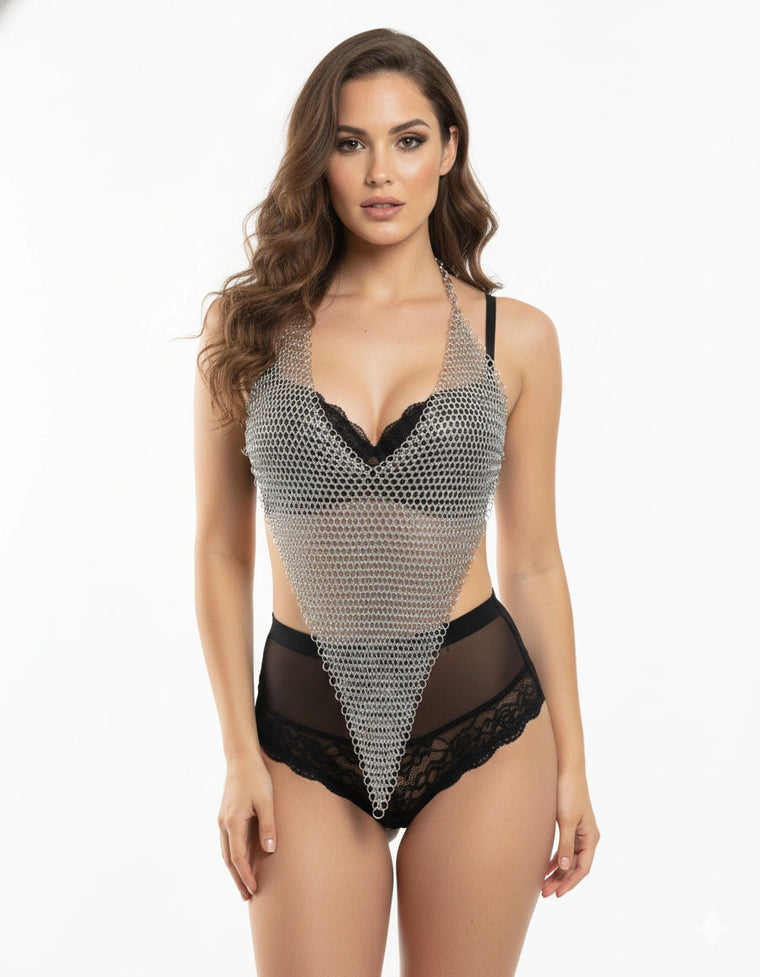
A chainmail epaulette uses linked-ring texture to create wider coverage. The chainmail shoulder collar frames the neckline and spreads across the shoulders. Its shape is closer to a statement collar with shoulder panels than to a few fine arm drapes.
Linked-ring coverage can dominate an outfit without extra necklaces. Check the front, side and rear route before choosing a base layer, and keep nearby zippers, lace and bag straps away from the ring edges. Browse the chainmail jewelry collection when linked-ring construction is the main preference.
Criss-Cross Shoulder and Chest Chains
The silver criss-cross chest chain uses shoulder drapes to build an X-shaped upper-body frame. This route places more visual emphasis on the chest than a shoulder-only cascade. Separate every crossing before fastening it so an accidental twist does not shorten one side.
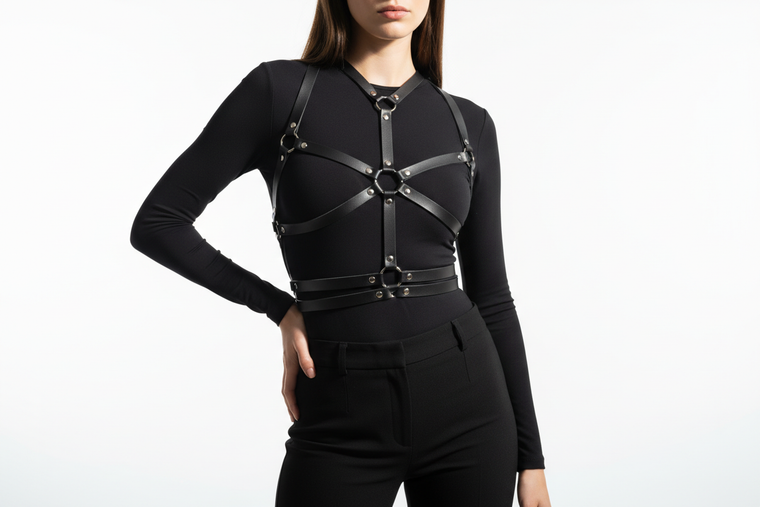
A criss-cross chain is still decorative jewelry. Harness wording in an old handle or product description does not establish support, restraint or load-bearing capability. For strap-led garments and accessories, use the fashion harness outfit guide instead of treating chains and straps as the same product type.
Shoulder Chain vs. Body Chain, Necklace and Fashion Harness
A shoulder chain is defined by its visible route over the shoulder. A body chain is broader and may connect the neck, chest, waist, hips or thighs. A shoulder necklace usually keeps the main structure near the neckline and shoulders. A fashion harness uses straps to create its frame, even when metal rings or chains appear as details.
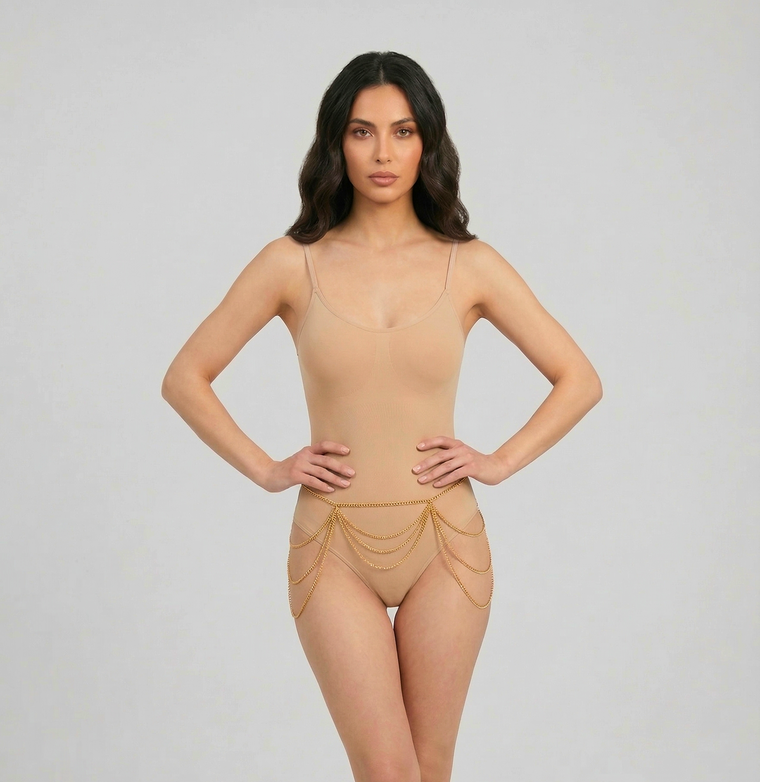
These categories overlap, but they answer different shopping questions. The existing body chain placement and fit guide covers full-body, waist and belly routes. This guide stays with shoulder-led pieces. It does not repeat waist-chain measurement or belly-chain styling instructions.
How to Choose Shoulder Jewelry by Chain Path
Choose the Coverage First
Decide whether you want a small shoulder accent, one asymmetric side, both shoulders or a shoulder-to-chest frame. Fine cascades leave more of the garment visible. A chainmail epaulette covers more surface and becomes the main upper-body accessory. An X-shaped chain introduces stronger geometry across the chest.
Map Every Anchor Point
Look for every place where the design closes or changes direction. Common points include the neck, one shoulder, an upper-arm loop, the opposite shoulder and a chest or torso connector. A piece with several routes cannot be assessed from a neck measurement alone. Use every numeric dimension supplied by the exact listing and resolve missing fit information before ordering.
Confirm Piece Count and Styling Props
Check whether the listing includes one asymmetric piece, a pair or one connected chain system. Dresses, lingerie, tops and other garments in the photos are styling backgrounds unless the listing identifies them as included. Gold-tone and silver-tone describe visible finish; they do not prove solid gold, sterling silver, allergy suitability or water resistance.
How to Put On Shoulder Jewelry
- Lay the complete piece flat and separate each strand without pulling fine links.
- Identify the neck, shoulder, arm and torso anchors shown in the product gallery.
- Fasten the main neck or upper anchor first, using the sequence shown for that product.
- Arrange shoulder drapes from the inside outward, then place any upper-arm or chest route.
- Check that no strand crosses a zipper, bra hardware, lace edge or bag strap.
- Turn your head, raise both arms, sit and walk before wearing the piece outside.
Do not copy the fastening order from a different product. A one-shoulder chain, epaulette collar and criss-cross chain use different routes. If a connector pulls or a strand presses painfully, stop and remove or adjust the piece.
Fit and Movement Checks
The neck connection should close without sharp pressure or restricted head movement. Shoulder strands should follow their intended route without cutting into the shoulder when the arm rises. Upper-arm loops need enough room for natural movement. Diagonal torso lines should remain separated instead of tightening one side when you turn.
Test the complete outfit, not the jewelry by itself. A smooth dress may let a fine chain move freely, while textured lace, sequins or an exposed zipper can catch links. A coat, bag strap or long hair can also change how the piece behaves. Decorative jewelry should not carry body weight or pulling force.
How to Style Shoulder Jewelry
With Strapless and Off-Shoulder Clothing
An open neckline gives a shoulder chain a clear background. Use a fine cascade for a lighter accent or a wider epaulette when the jewelry should lead the look. Put on the garment before the chain and remove the chain before changing clothes.
For Bridal and Formal Looks
Warm gold-tone drapes can add a shoulder accent to a simple dress, while silver-tone pearl-look lines create a cooler asymmetric route. Match by chain path and visible finish rather than assuming every pearl-look piece uses natural or cultured pearls. The bridal body jewelry collection separates shoulder, torso, waist, thigh and foot placements. For a darker ceremony palette, read the black wedding accessories guide.
For Festival and Alternative Outfits
A chainmail epaulette can supply the main metal texture over a plain top, dress or bodysuit. A fine shoulder chain adds less coverage and can sit beside a simpler choker or earring. Test closures and loose drapes while moving, and check the event's current rules for prominent metal accessories. The chainmail styling and coverage guide covers linked-ring tops and base layers in more detail.
Care and Storage Boundaries
Use the care record for the exact product. Before storage, separate shoulder and arm drapes and close the main fastening so fine strands do not knot around one another. The gold shoulder chain page recommends a soft dry cloth. The one-shoulder pearl-look piece should be stored with its strands separated and kept away from zippers and heavier jewelry.
Do not assume that a beach, bridal or festival photo proves compatibility with water, salt, chlorine, perfume or sunscreen. Finish wording alone does not establish tarnish resistance. Avoid universal metal-cleaning instructions when the exact alloy, plating or accent material differs.
Shop Shoulder Jewelry by Silhouette
Choose the gold draped shoulder chain for fine neck-to-arm cascades, the silver-tone pearl-look chain for an asymmetric diagonal route, or the chainmail epaulette necklace for broader linked-ring coverage.
Compare additional torso-led designs in body chains, linked-ring pieces in chainmail jewelry, or event-focused shoulder routes in bridal body jewelry.
Frequently Asked Questions
What is shoulder jewelry called?
Common names include shoulder chain, shoulder necklace, shoulder body chain and epaulette necklace. The terms overlap, so identify the product by its photographed neck, shoulder, arm and chest routes.
Is a shoulder chain the same as a body chain?
A shoulder chain can be one type of body chain, but body chains also include designs that focus on the chest, waist, hips or thighs. Shoulder chains keep the defining detail at one or both shoulders.
How should shoulder jewelry fit?
It should close without sharp pressure and allow normal head, shoulder and arm movement. Compare every published dimension with the matching body point and do not treat One Size as a universal range.
Can you wear shoulder jewelry over a dress?
Yes, when the chain path and fastening points work over that garment. Measure and test the piece over the intended dress, and keep links away from textured lace, sequins, zippers and straps.
How do you keep shoulder chains from tangling?
Lay the piece flat before wearing, separate strands from the main anchor outward, close the fastening for storage and keep it apart from heavier jewelry. Follow product-specific care instructions when materials differ.