An anklet size should start with a body measurement, not a generic shoe size or a model photograph. Measure the exact position where the chain will sit, record the number, then compare it with the product's published circumference or adjustment range.
This guide avoids one universal allowance because a fine chain, layered charm anklet, cuff, boot chain and toe-ring foot chain do not behave the same way. Browse current anklets and ankle bracelets after you have the measurement.
How to Measure Your Ankle for an Anklet
- Choose the exact height where the anklet will sit.
- Stand in a neutral position and keep the foot flat.
- Wrap a flexible tape around the ankle without pulling it tight.
- Keep the tape level and check that it is not twisted.
- Record the body measurement in centimeters or inches.
- Compare that number with the product's stated size or adjustment range.
String Method When You Do Not Have a Flexible Tape
Wrap a non-stretch string around the intended position, mark the overlap point and measure the marked length against a ruler. Do not use an elastic cord because it can change length under tension. Repeat the measurement once to catch a misplaced mark.
Choose a Fit Preference After Measuring
A close, standard or more draped fit is a styling and comfort decision. The product must still cover the body measurement within its documented range. A fixed cuff may need a different relationship to the ankle than a fine chain with an extender, and a layered piece needs room for several strands to settle.
Avoid applying one extra centimeter or inch to every product. Link thickness, charm weight, clasp position and intended drape can change the result. Use the maker's fit guidance when available.
Record a Measurement You Can Recheck
Write down the number, unit and wearing position together, such as “above ankle bone over thin hosiery.” A number without its position can be misleading when you return to a product later. If the first and second measurements differ, reset the tape and take a third reading rather than averaging a twisted or overly tight attempt.
When a product range is not published, the photograph is not a safe substitute for circumference. Ask for the missing dimension or choose a listing with enough information to compare. If your measurement falls between documented attachment points, follow the product's fit guidance instead of assuming the longer or shorter point will feel right.
How Extenders Change the Decision
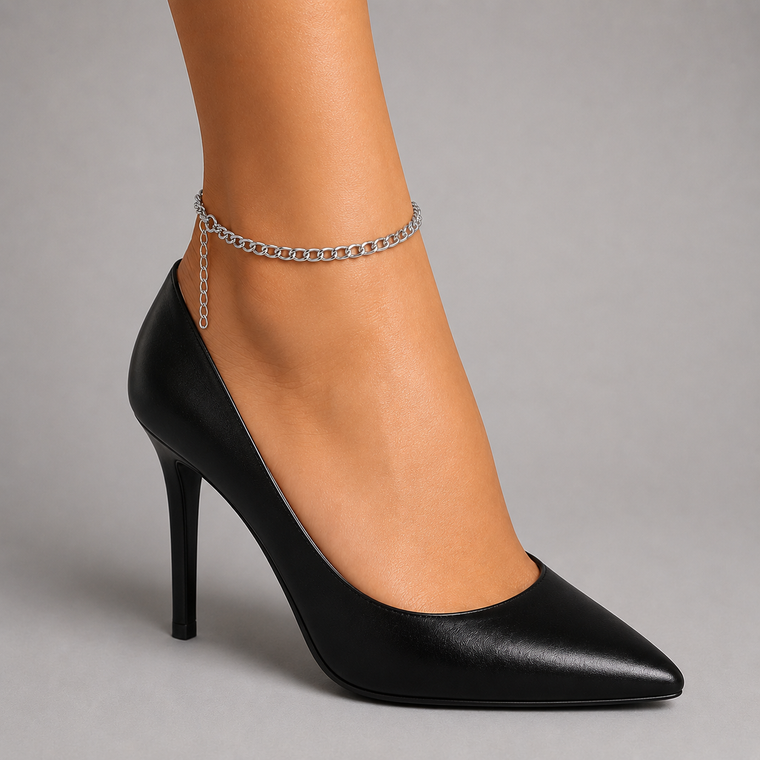
An extender provides several possible attachment points, but it does not prove an unlimited fit range. The minimal silver-tone anklet visibly includes a clasp and extender; its total circumference still needs to come from the live specification. Position any unused extender links so they do not drag on the shoe edge.
Measure for the Actual Construction
Fine and Single-Chain Anklets
Measure the intended circular position and check clasp clearance. A fine chain can be less visible in photographs, so do not estimate length from apparent scale alone.
Layered and Charm Anklets
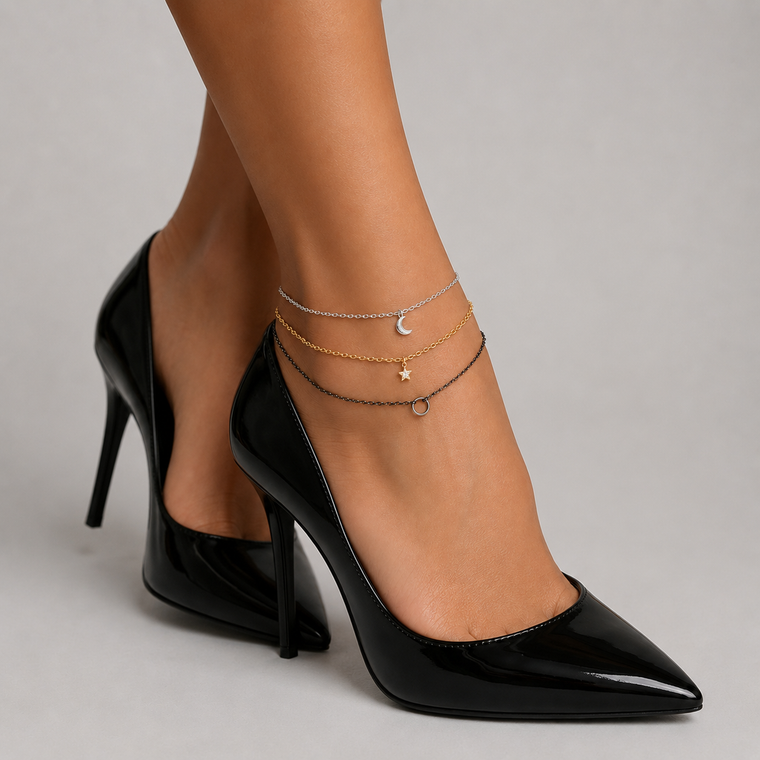
Confirm whether the layers share one closure or use separate pieces. Check that the lowest strand and each charm remain clear of footwear. The layered gold-tone anklet is one photographed multi-strand product, but its images do not show a closure or measurement.
Cuffs and Wide Gothic Styles
Record the ankle circumference and compare the vertical width with the available space above the shoe. A wider cuff can contact more skin and may sit differently from a single chain.
Boot Chains
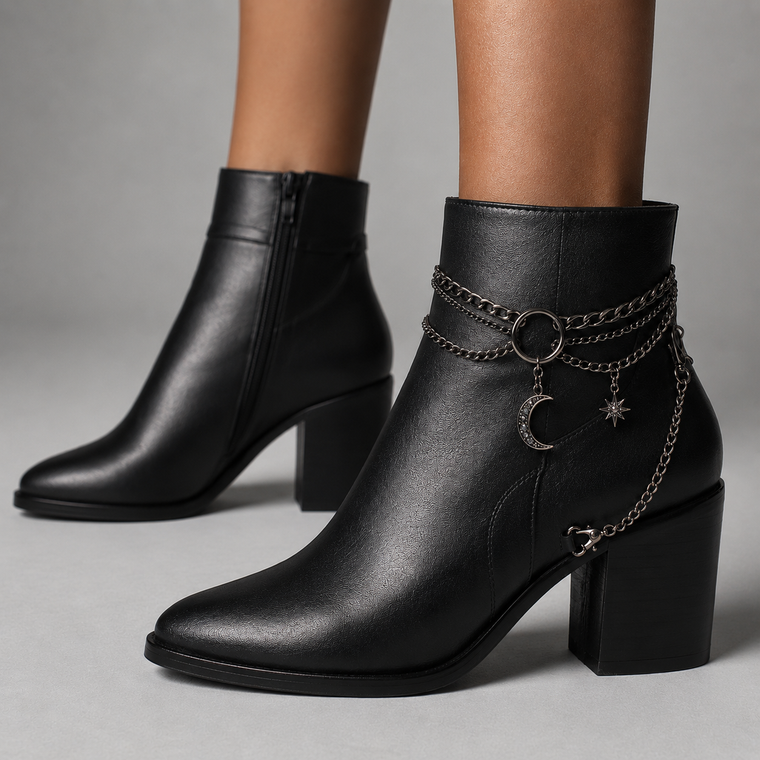
Measure around the intended boot shaft rather than the bare ankle. Account for zipper, seams, eyelets and shaft taper. Use the boot-chain styling guide for placement checks.
Toe-Ring Foot Chains
A foot chain needs an ankle-route check plus the distance across the top of the foot toward the toe ring. One ankle circumference cannot verify the entire fit.
Common Measurement Errors
- Measuring at a different height from the intended wearing position
- Pulling the tape tight or leaving a visible gap
- Using a stretch cord instead of stable string
- Assuming an extender means every ankle size is covered
- Ignoring socks, hosiery, boot shafts or shoe straps
- Using a wrist-bracelet measurement for an ankle product
Recheck After the Product Arrives
Before extended wear, compare the received construction with the listing and fasten it at the intended route. Test the full footwear combination while sitting, standing and walking. Stop if a clasp, charm or chain repeatedly catches, if a cuff presses painfully, or if a foot chain becomes taut across the top of the foot.
Measurement Basis and Limits
This guide uses a repeatable body-measurement method: define the exact wearing position, keep the tape or non-stretch string level, record the unit and compare the result with the current product's usable range. It deliberately does not prescribe one extra allowance for every anklet construction.
ISO 8559-1 is a general clothing anthropometry reference, not an anklet sizing standard. It supports clearly defined measurement points; the product listing remains the source of truth for clasp positions, extender range, fixed circumference and construction-specific fit.
Frequently Asked Questions
How do I measure my ankle for an anklet?
Wrap a flexible tape around the exact wearing position without pulling it tight, keep it level and record the body measurement. Compare that number with the product's documented range.
How much room should an anklet have?
There is no universal allowance for every design. Choose a fit preference only after confirming that the product range covers the body measurement and follow product-specific guidance.
Should I measure over socks or hosiery?
Measure over the layer you intend to wear beneath the anklet. If you will alternate between bare skin and hosiery, check whether the adjustment range covers both positions.
Does an extender mean one size fits all?
No. An extender creates several attachment points within a finite range. Confirm the total documented circumference before ordering.
Do boot chains use the same measurement?
No. A boot chain must fit around the intended footwear shaft and clear zippers, seams and eyelets. Measure the boot at the exact route.
How to Check a Toe-Ring Anklet and Wedding Foot Chain
A circular anklet needs an ankle measurement, but a toe-ring anklet also crosses the top of the foot and connects to a toe loop. Check the ankle closure, the connecting-chain path and toe placement as separate points. The current product has one worn gallery image and no published numeric toe-loop range, so the image should not be treated as proof of universal fit.
For wedding foot jewelry, decide whether the piece will be worn barefoot or near a sandal strap, then sit, stand and walk to check pulling and snagging. Browse the bridal body jewelry collection for foot, waist, shoulder and thigh routes.
The wedding foot jewelry guide continues with route, footwear and occasion checks after measurement.