A gold anklet and a silver anklet can change the visual temperature and contrast of an outfit, but color does not prove material. Start with the photographed finish and chain construction, then use the product specification for any claim about solid gold, sterling silver, plating or base metal.
The current anklet collection includes several gold-tone designs, one minimal silver-tone chain, a wider silver-tone curb chain and mixed-metal jewelry. This guide helps choose among those visible directions without applying universal skin-tone rules.
Choose Gold-Tone for a Warmer Visible Accent
Gold-colored chains can repeat warm buckles, earrings, bag hardware or waist jewelry. The assortment includes layered charms, coin drops, herringbone, rope-style and Figaro links, plus moon and star designs. The layered gold-tone anklet has the strongest multi-chain movement, while the herringbone style presents a flatter line.
Use gold-tone as an appearance description unless the listing documents a precise material. A product photograph cannot establish karat value, plating thickness or metal sensitivity.
Choose Silver-Tone for a Cooler, Minimal Line
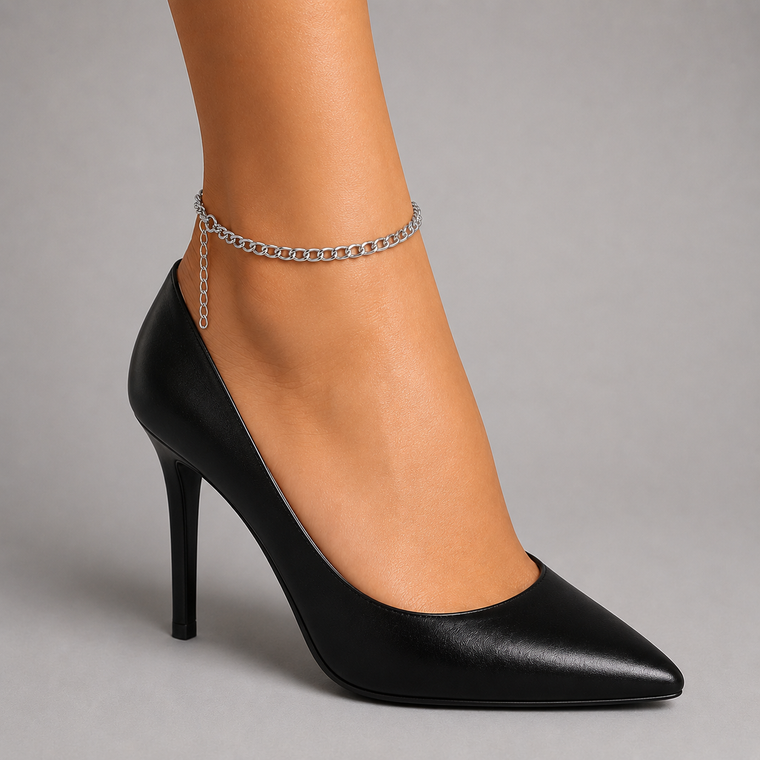
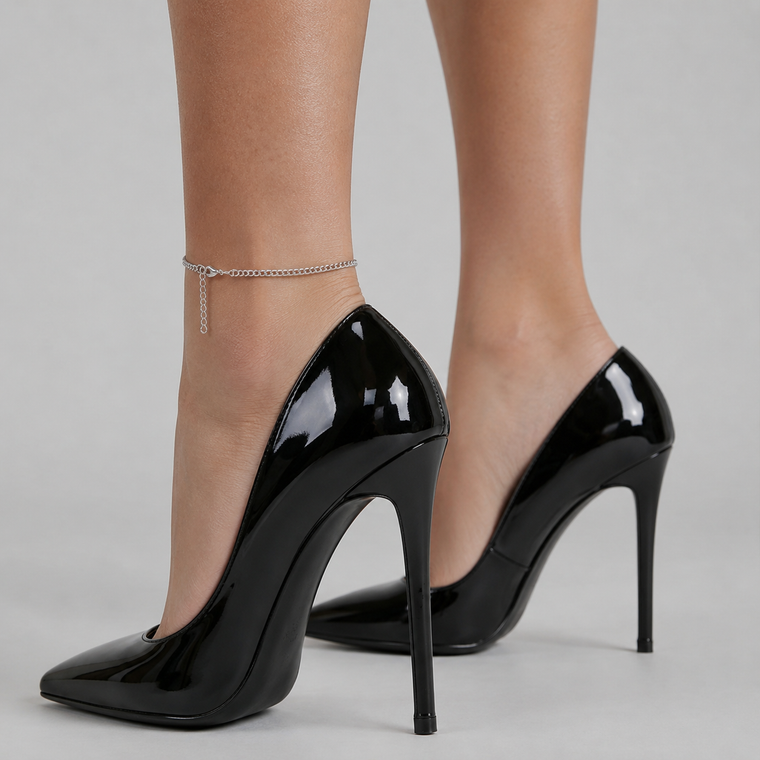
Silver-colored chains can repeat chrome, silver-colored buckles, cool hardware or black-and-silver accessories. The minimal silver-tone anklet uses one fine chain and visible extender, while the curb-chain style offers wider links. Neither appearance alone establishes sterling silver.
Use Mixed Metal When the Outfit Already Combines Hardware
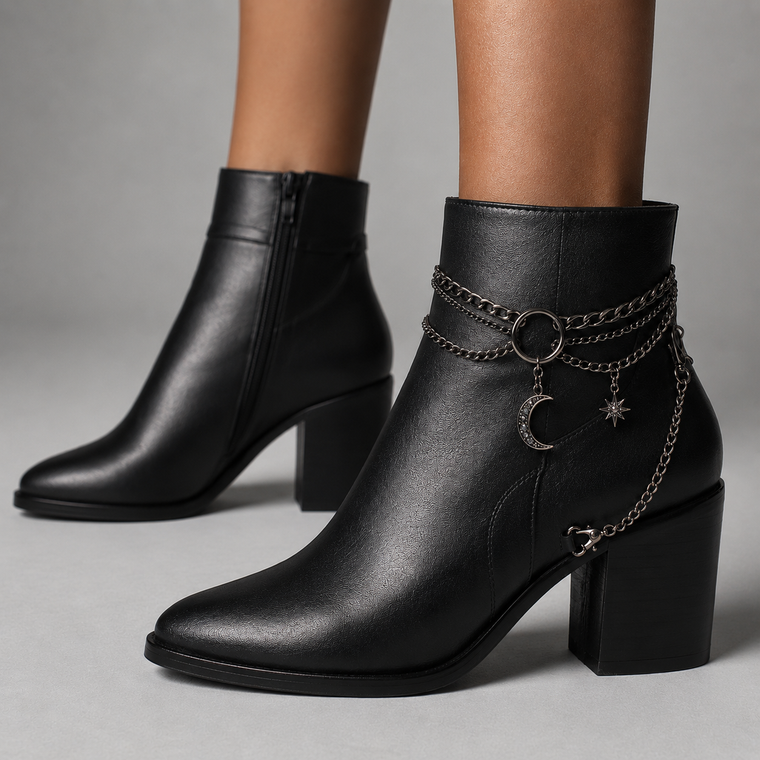
A mixed-metal anklet can connect gold-, silver- and gunmetal-colored elements without forcing every accessory into one finish. The current mixed-metal product uses multiple strands and several celestial or O-ring-style charms. Check its gallery and fit as a layered piece rather than treating it like a single chain.
Construction Can Matter More Than Color
A fine silver-tone chain may be quieter than a layered gold-tone charm anklet, but that difference comes from strand count, link scale and charms as well as color. Compare a flat herringbone chain, twisted rope-style chain, Figaro link, curb link and charm chain by the outline they create at the ankle.
A Five-Step Gold vs Silver Decision
- Identify the shoe and outfit hardware that will remain visible.
- Choose subtle single-chain or more visible layered, charm or wide-link construction.
- Compare gold-, silver- and mixed-color finishes in the actual product gallery.
- Verify size, closure, included pieces and material documentation separately.
- Test whether the chain and any extender clear the intended shoe edge.
This sequence prevents color from becoming a shortcut for every other decision. A minimal silver-colored chain and a layered gold-colored chain differ in motion, scale and strand count as well as finish. Compare like-for-like constructions when color is the only variable you want to judge.
Coordinate With Shoes and Other Jewelry
Repeat a visible metal color in earrings, a waist chain or body chain when you want a deliberate connection. Contrast can also be intentional. Black footwear makes both gold- and silver-colored chains easy to see in the current galleries, but the shoe is a styling item rather than part of the anklet.
Use Contrast Deliberately
A finish can repeat nearby hardware or stand apart from it. Test the choice in the lighting and footwear you intend to use, because reflective links can appear different across product photography and indoor light. There is no universal skin-tone rule that selects gold or silver for every person; visible preference and outfit context are the relevant styling inputs.
Compare One Variable at a Time
To judge finish, compare products with similar link scale and strand count. To judge construction, compare several finishes in a similar chain format. Changing color, link width, charm count and footwear at once makes it difficult to identify which feature creates the preferred result.
Save the product links you compare and note the visible finish, construction, closure evidence and stated dimensions. A small comparison record is more reliable than remembering color from differently lit photographs.
Material and Care Questions Before Buying
- Does the listing document the base metal or only the visible color?
- Is a plating or coating identified?
- Are water and chemical exposure limits stated?
- Is an extender or fixed circumference documented?
- Does the gallery show the clasp, reverse and all charms?
- Are sensitivity claims supported by a material disclosure?
Follow the current care directions. Do not infer waterproof or tarnish-resistant performance from color. Keep chains separated in storage, inspect clasps and charms, and avoid contact with rough shoe hardware that can scratch or catch the finish.
Frequently Asked Questions
Should I choose a gold or silver anklet?
Choose the visible finish and construction that work with the outfit hardware and desired contrast. Then verify material, size and care separately on the product page.
Does a gold-colored anklet mean solid gold?
No. Gold color is an appearance. Solid gold, karat value or plating must be explicitly documented.
Does a silver-colored anklet mean sterling silver?
No. Silver-tone appearance does not establish sterling silver or purity. Use the product specification for material.
Can I mix gold and silver anklets?
Yes as a styling choice, provided each piece fits and the clasps, chains and charms do not tangle. A mixed-metal product can also combine the colors in one layered composition.
Can gold-tone or silver-tone anklets get wet?
Water tolerance depends on documented material and finish. Follow the individual care directions and do not assume waterproof performance from color.