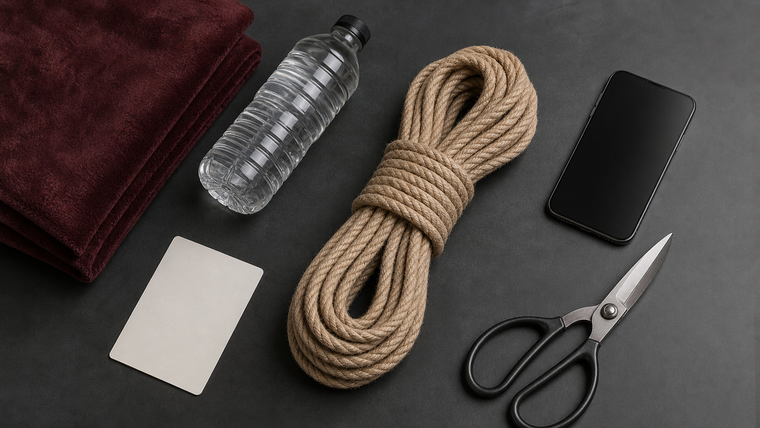
BDSM gear is an umbrella term for equipment and accessories used in consensual bondage, discipline, dominance and submission, or sensation-focused play. In shopping searches, people also use bondage gear for cuffs, collars, harnesses, rope, connectors, impact tools and related accessories. Those categories look similar in a product grid, but they differ in fit, materials, closures, care and risk.
This guide explains what common categories are designed to do, which product details deserve comparison and why appearance alone cannot prove that an item is suitable for restraint or weight-bearing use. It is a buying and care guide, not a set of instructions for performing BDSM activities. Browse the complete BDSM gear and accessories collection when you are ready to compare current products.
What Is BDSM Gear?
What is BDSM gear in practical terms? It can include wearable symbols such as collars, fashion harnesses and masks; adjustable accessories such as cuffs and garters; flexible materials such as rope or self-adhering tape; connector hardware; and sensation or impact tools. Some products are primarily visual. Others change movement, sensation or communication and therefore carry different risks.
The name of an item is not a safety certification. A product called a harness may be designed only for outfit layering, while purpose-built equipment from a specialist supplier may publish load ratings or technical limits. Lunarness product pages describe the item that is actually sold. If a listing does not explicitly document a load-rated use, do not infer one from D-rings, chains, buckles or product photography.
Bondage Gear Versus Fashion Accessories
Fashion harnesses, decorative collars, chain pieces and cage-style garments can communicate an aesthetic without being suitable for force, suspension or body-weight support. Treat decorative hardware as decorative. If your intended activity depends on a component carrying load, seek equipment with explicit manufacturer documentation and training appropriate to that activity. This distinction protects both product expectations and the person wearing it.
BDSM Equipment, Bondage Equipment and Gear: What the Terms Mean
Searches for BDSM gear, bondage gear, BDSM equipment and bondage equipment often lead to overlapping product categories. The terms do not describe separate quality grades or safety certifications. This guide explains the vocabulary and comparison points; the BDSM gear and bondage accessories collection is the commercial destination for browsing current products.
BDSM equipment and BDSM items
BDSM equipment is a broad label for products used in consensual kink contexts, including wearable accessories, restraint components, sensation products and impact items. The phrase BDSM items can also include symbolic or fashion-led pieces that are not designed to control movement. Always use the individual listing to determine the documented purpose, material, fit and limitations.
Bondage equipment, bondage tools and supplies
Bondage equipment usually refers more narrowly to cuffs, straps, rope, tape, connectors and related products associated with restraint. Retailers may call the same categories bondage tools, bondage supplies or bondage items. Those labels do not prove load capacity, instant release or suitability for a particular activity. Compare the actual construction and instructions instead of relying on the category name.
Bondage accessories, fetish gear and sex-equipment searches
Bondage accessories may include collars, cuffs, connectors, masks, garters and decorative additions to a larger set. Bondage fetish gear is a broader retail phrase that can include both functional-looking products and fashion pieces. Searches for bondage sex equipment or bondage sex gear often surface the same mixed catalog, so product-level documentation remains more useful than the search label.
BDSM bondage gear and BDSM bondage equipment are overlapping search phrases rather than distinct product standards. Before buying, confirm what is included, where the item is intended to sit, how it adjusts, how it is removed and whether the maker documents any use beyond fashion or light accessory wear.
Common Types of BDSM and Bondage Gear
Collars and Leashes
Collars range from discreet day styles to wide faux leather pieces, metal designs and O-ring chokers. Compare the listed neck range, band width, lining or edge finish, closure and whether any leash is detachable. A collar-and-leash set can be used as a symbolic or styling accessory without placing pulling force on the neck. Never assume that a decorative collar is appropriate for resistance, breath restriction or suspension. See the current BDSM collar collection for product-specific measurements.
Cuffs and Restraint Accessories
BDSM cuffs and BDSM wrist restraints may use buckle bands, hook-and-loop-style panels, webbing straps, D-rings or removable clips. The reviewed Lunarness collection is strap-based; it does not contain locking metal handcuffs. Look for the measurement range and closure of each cuff, not only the overall set name.
A listing may describe a two-cuff faux leather pair with a short connector, a dedicated ankle-cuff pair, or an under-bed system photographed with four padded cuffs and adjustable webbing. Check the exact cuff count, intended body position, connector and fit on the product page. The bondage cuffs collection keeps these differences visible.
Consent must be informed and voluntary, and it can be withdrawn. Inspect every strap, closure, ring and clip; keep a separate release method immediately available and stop for pain, numbness, tingling, unusual color or temperature change, swelling, breathing difficulty or panic. Decorative hardware is not proof of a suspension or body-weight rating.
Harnesses, Garters and Strap Sets
Harnesses can cover the chest, torso, hips, thighs or several areas at once. Product photos help explain the strap path, but measurements still determine where a buckle or ring will sit. Review which pieces are included, whether straps adjust independently and whether sizing is required before checkout. Lunarness harnesses should be treated as fashion accessories unless a listing explicitly states otherwise; they are not represented as suspension equipment.
Rope and Tape
Cotton and jute rope differ in texture, stiffness, care and the skill required to use them. Self-adhering bondage tape behaves differently again because it is designed to cling to itself rather than use knots. Neither a soft label nor a beginner label removes the need for education about circulation, nerves, release planning and communication. Read our bondage tape safety guide before treating tape as interchangeable with rope.
Connectors, Clips and Extender Straps
Three-way and four-way connectors organize attachment points, while extender straps change the reach of compatible pieces. Check the connector shape, snap style, swivel movement and the dimensions shown in the listing. A quick-release name describes the product mechanism; it is not proof that every configuration can be released instantly under tension. Keep a separate release plan appropriate to the materials being used.
Impact and Sensation Tools
Paddles, floggers, riding-crop styles, clamps, masks and gags fall into broad impact or sensation categories, but they are not interchangeable. Material, flexibility, contact area, adjustability and removal method matter. Higher-risk activities require education beyond a product description. A product page can help you compare construction and size; it cannot replace learning anatomy, communication and activity-specific risk management from a qualified educator.
For product-level comparison, use the nipple clamps and non-piercing nipple jewelry collection. It separates adjustable metal clamps from decorative gold-tone jewelry and shows the exact hardware, chain route and photos available for each listing.
Bondage and Restraints: How the Categories Differ
Bondage and restraints overlap, but they are not interchangeable labels. Bondage is the broader consensual practice or styling category. A restraint is a specific product or configuration intended to limit or connect movement. This means cuffs, straps, rope, tape and connected systems may be discussed as restraints, while a decorative collar, fashion harness or symbolic accessory may belong to a bondage aesthetic without being documented for restraint.
Wearable cuffs and connected restraint systems
Wearable restraints include wrist or ankle cuffs that fasten around one body area. Connected systems add a strap, clip or webbing route between two or more cuffs. An under-bed system is different again because its long straps route around furniture. These products should not be treated as interchangeable: compare the body position, cuff count, adjustment range, closure, connector and included pieces on the exact listing.
Decorative items versus documented restraint products
A ring, buckle, chain or strap can appear on both fashion accessories and restraint products. Appearance alone does not establish function or load capacity. If a listing describes an item only as fashion, jewelry or styling wear, do not assign it a restraint, suspension or body-weight role. If the intended use is unclear, choose a product with more specific documentation.
How to compare restraint categories
- Body position: Confirm whether the item is listed for wrists, ankles or another specific area.
- Piece count: Check whether the order contains one pair, four cuffs, connectors or a larger system.
- Closure and removal: Identify how each buckle, clip, strap or panel opens before use.
- Fit and contact: Compare the stated measurement range, edge finish and material with where the item will sit.
- Limitations: Do not infer suspension, force or load-bearing suitability unless the maker explicitly documents it.
For current product-level comparisons, use the bondage restraints and BDSM cuffs collection. Shoppers looking for restraints for BDSM can compare the available wrist, ankle, under-bed and harness-led sets there without turning this informational guide into a competing product page.
How to Choose BDSM Accessories
Start With Intended Use and a Clear Boundary
Define whether you want an outfit accessory, a symbolic wearable, an adjustable cuff set, a connector, a care item or equipment for a specific activity. That decision prevents a visually similar item from being assigned a job it was not documented to perform. If you cannot find the intended use or limitation in the listing, ask before buying or choose a product with clearer documentation.
Measure the Body Area Where the Item Will Sit
Use a flexible tape and compare the result with the product-page range. Measure the neck for a collar, wrist or ankle for cuffs, and the relevant chest, waist, hip or thigh point for a harness. Do not transfer a size from one product to another when the strap layout or closure differs. An adjustable label means there is a range; it does not mean unlimited fit.
Inspect the Closure Before Use
Buckles, lobster clasps, snaps, screw closures, locks and self-adhering materials release in different ways. Practice opening the item while it is not being worn. Keep keys and any appropriate cutting or release tool reachable, and never create a situation in which the person wearing the item cannot communicate a problem. Our bondage positions safety guide covers communication and positioning risks at a higher level.
Compare Included Pieces, Not Just the Hero Image
A styled image may show clothing or accessories that are not part of the listing. Read the product title, included-pieces statement, variants and gallery captions. For example, a BDSM starter kit should be evaluated by the exact five pieces listed on its page, not by assuming that every beginner set contains the same components.
A Practical Beginner Buying Checklist
A first purchase does not need to reproduce an elaborate scene. Begin with a clearly documented item whose fit and removal method you understand. Before checkout, confirm the product material, measurement range, included pieces, closure, care notes and whether the listing describes the intended use. After delivery, inspect seams, straps, edges, hardware and moving parts before wearing the item. For ordering, delivery and return questions, read the Lunarness FAQ before checkout.
Consent and boundaries should be discussed independently of the purchase. Agree on what is and is not being considered, how anyone can pause or stop, and what will happen if communication becomes difficult. RAINN describes consent as clear, voluntary and ongoing, while the National Coalition for Sexual Freedom provides BDSM-specific consent education. Gear is never permission, and owning an item does not imply agreement to use it.
Cleaning, Care and Storage
Can BDSM gear be washed? There is no single answer because faux leather, metal, silicone, cotton, jute and adhesive materials require different care. Follow the product-specific directions first. Do not soak a mixed-material item merely because one component tolerates water. Patch-test any cleaner on a hidden area, wipe away residue and allow the item to dry completely before storage.
Store clean, dry pieces separately when chains, buckles or textured surfaces could scratch softer materials. Keep keys with locking products and inspect connectors, straps and edges again before reuse. Replace an item when damage, corrosion, cracking, sharp edges or a failing closure makes its condition uncertain. Cleaning also does not make a single-user item automatically appropriate for sharing; consider hygiene and bodily-fluid exposure separately.
Consent and Safety Resources
Consent must be freely given and can be withdrawn. Discuss boundaries before any sexual or BDSM activity, check in during it and stop when consent is withdrawn or cannot be communicated. Do not use gear with someone who cannot consent. Higher-risk activities, unfamiliar restraint, suspension, breath restriction and self-restraint require specialized education and should not be improvised from a shopping guide.
- RAINN: Consent, boundaries and ongoing agreement
- National Coalition for Sexual Freedom: Consent Counts
- Planned Parenthood: Communicating with a partner about sex
If you are choosing clothing and styling rather than equipment types, start with our BDSM outfit guide; it separates coverage, venue and fit decisions from gear function.
Frequently Asked Questions
What is the difference between bondage and restraints?
Bondage is the broader consensual activity or aesthetic category. Restraints are specific products or configurations intended to limit or connect movement, such as cuffs, straps, rope, tape or connected systems. Not every bondage-themed fashion accessory is documented for restraint.
What is bondage gear?
Bondage gear is a broad term for cuffs, straps, rope, tape, connectors, collars and related accessories associated with consensual restraint or bondage styling. Products within that group can have very different purposes and limits, so the listing should define the material, fit, closure, included pieces and intended use.
What is BDSM equipment?
BDSM equipment can include symbolic wearables, fashion accessories, restraint components, sensation products and impact items used in consensual BDSM contexts. It is a general category name, not a safety rating. Compare the documentation for the specific item rather than assuming that every product described as equipment performs the same function.
What is the best bondage gear for a beginner?
The best bondage gear is not one universal product. A beginner should start by defining the intended use, then choose a clearly documented item with understandable measurements, materials, closure and removal method. Avoid products whose expected function or limitations cannot be confirmed from the listing.
What is considered BDSM gear?
BDSM gear can include collars, cuffs, harnesses, rope, tape, connectors, masks, gags, impact tools and other accessories used in consensual kink or BDSM contexts. Some pieces are fashion or symbolic accessories; others are intended for a specific activity. The listing should define the actual product and its limitations.
What BDSM gear should a beginner buy first?
Choose a clearly documented item whose fit, material, closure and removal method you understand. A simple adjustable accessory or an accurately listed starter set may be easier to compare than advanced equipment, but a beginner label does not remove the need for consent, education and release planning.
How should cuffs or collars fit?
Use the product's stated measurement range and follow its fit notes. The item should not cause breathing difficulty, dizziness, numbness, sharp pain or unusual color or temperature change. Remove it immediately if those warning signs occur, and never use a decorative neck item for load or breath restriction.
Can BDSM gear be washed?
Care depends on the material and construction. Follow the individual product directions, avoid assuming that a mixed-material item can be soaked, patch-test cleaners and dry items fully before storage. Rope, faux leather, metal and silicone should not automatically receive the same treatment.
Are fashion harness D-rings load-bearing?
Not unless the product documentation explicitly provides a safety-rated use. A D-ring or chain is not proof of load capacity. Treat Lunarness fashion harnesses as outfit accessories and do not use them for suspension, body-weight support or other load-dependent restraint.