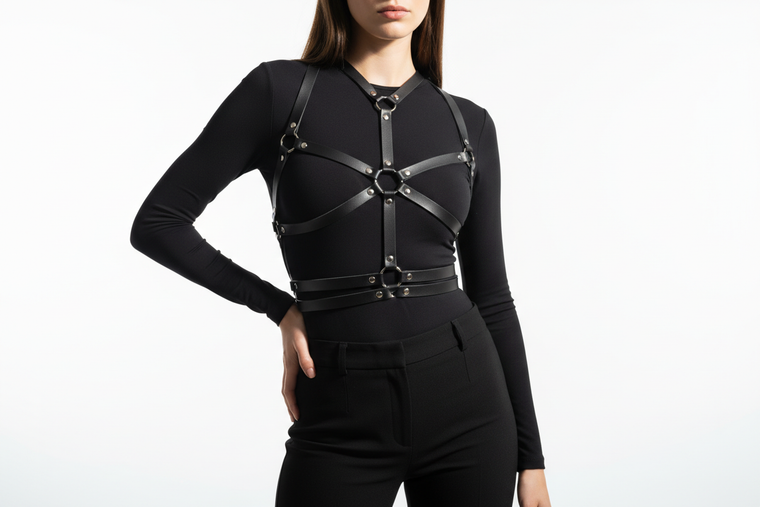
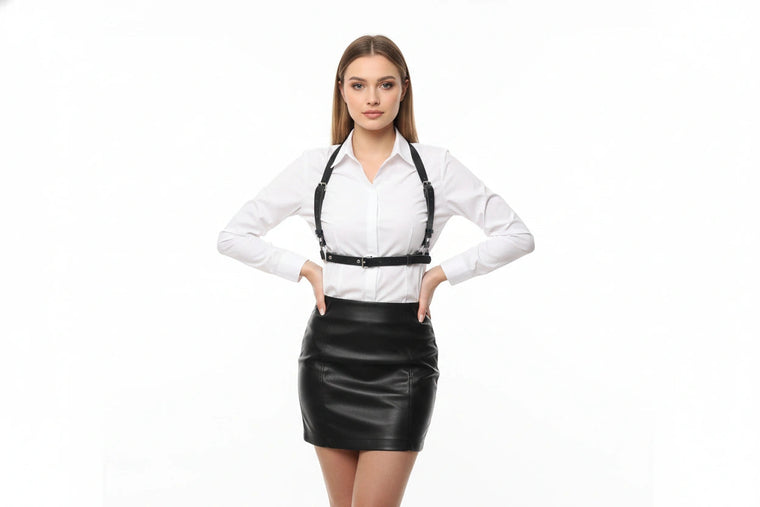
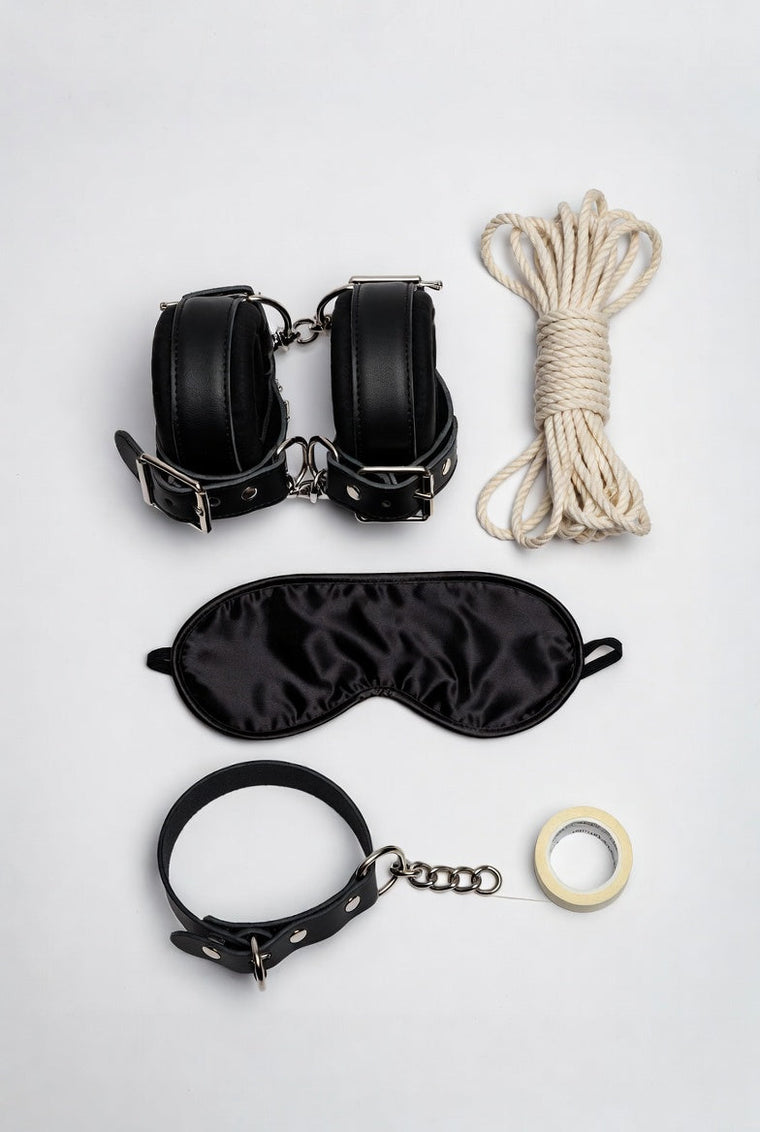
A men's harness changes an outfit through strap direction, coverage and contrast. The useful question is not simply “How do I wear a men's leather harness?” but which chest, shoulder, waist or leg line the design creates and whether that exact line fits your body and base layer. Lunarness products in this guide are listed as faux leather, although shoppers often use “men's leather harness” as the category phrase.
This guide separates styling from safety. The reviewed harnesses are decorative fashion accessories unless a product publishes a separate tested specification. Rings and straps should not be used for suspension, restraint, fall protection, lifting or carrying body weight.
Start with the Men's Harness Shape
Single-Band Chest Harness
A single horizontal chest band with shoulder straps creates the lightest visual frame. It stays readable over a fitted tee and leaves more of the shirt visible than a double-band or connected body harness. Check the side photo for band height and the rear photo for the shoulder connection before choosing.
Double-Band Chest Harness
Two horizontal bands add coverage and make the torso line more prominent. Adjust both bands evenly so one does not pull higher than the other. The men's double-band chest harness shows a wide-strap front and H-shaped rear construction in its three current images.
Bulldog and Y-Back Harness
A bulldog harness uses suspender-like shoulder straps that meet a lower torso band and converge at the back. The classic faux leather bulldog harness provides close, front, rear and side views. A suspender harness can place the horizontal band higher; compare the exact gallery rather than treating both names as interchangeable.
X-Back and Butterfly Harness
An X-back sends wider straps diagonally across the shoulder blades. From the front, a butterfly layout can create a compact geometric frame around the upper chest. Use the men's X-back harness when you want broad crossing straps rather than thin Y-back lines.
Asymmetric Single-Shoulder Harness
An asymmetric harness uses one shoulder as the anchor and draws a diagonal line across the chest. It works well when an open jacket or one-shoulder garment leaves the line visible. Confirm which shoulder is shown and how the rear straps cross; do not assume the piece can be reversed unless the listing says so.
Chest-and-Waist or Full Body Harness
A chest-and-waist set adds a second focal point below the ribs. A connected full-body design continues toward the legs and requires more measurements, more movement testing and more attention to what is included. Compare the two-piece torso harness with the connected chest and leg-strap set before choosing coverage.
How to Measure a Men's Harness
Measure the Photographed Strap Positions
Use a flexible tape and keep it level without pulling it tight. Measure the chest where the visible band sits, not automatically at the widest point. Add the natural waist or low-waist measurement for torso sets, and measure the relevant thigh position when leg straps are included. If you will wear the harness over clothing, measure over a similar layer.
Do Not Translate “One Size” into Universal Fit
A one-size option is a selector label, not a body-range guarantee. Read the product-specific measurement request and adjustment information. If the page asks for sizing for a made-to-order piece, provide those values rather than choosing from memory or copying measurements from a different harness.
Check Strap and Hardware Placement
Shoulder straps should lie flat without cutting into the neck or armpit. Chest bands should allow a comfortable full breath. Waist and thigh sections should not cause numbness, pinching or restricted movement. Place buckles where they can be reached and where a bag strap, zipper or seat belt will not press them into the body.
How to Put On a Men's Chest Harness
- Lay the harness flat and identify the front connector, rear junction and any independent sections.
- Loosen the adjustable points before putting it over the shoulders or around the torso.
- Fasten the main band at the height shown in the product gallery.
- Shorten paired straps in small, even increments so the center stays aligned.
- Take a full breath, sit, reach both arms overhead and bend before final styling.
- Recheck the rear placement in a mirror or photo; a front view cannot show twists at the back.
Men's Harness Outfit Ideas
Over a Fitted T-Shirt
A plain fitted tee creates a clean background and makes the strap geometry easy to read. Black faux leather over white, grey or a saturated color produces contrast; black over black creates a quieter texture change. Keep the shirt smooth so folds do not bunch beneath the chest band.
With an Open Jacket
Use an open blazer, denim jacket or cropped outer layer to frame the center of the harness. Check that lapels and zippers do not hide or catch the main connector. A compact X-back or asymmetric front can work better than a connected full-body set when the jacket supplies most of the coverage.
For Club and Rave Outfits
Pair the harness with trousers, shorts or a simple mesh base and let the upper-body straps remain the primary accessory. Test the outfit under movement, heat and the bag you will carry. For more base-layer ideas, read the men's rave outfit guide.
Pride and Personal Expression
Searches such as gay harness and gay leather harness often point to masculine chest-harness styling for Pride, nightlife or personal expression. No strap layout belongs to one identity, and no design represents every person. Choose the construction and coverage that suit your outfit and comfort rather than treating a search label as a dress code.
Color and Product-Photo Checks
Most current Lunarness men's harness galleries show black examples; the connected full set is photographed in brown. Several selectors list more colors. A selector proves that an option can be chosen on the current page, while a gallery proves only the appearance it actually shows. Confirm the selected order line and do not assume an unphotographed finish will match the lighting of the black or brown images.
Fashion Harness vs. BDSM Equipment
A fashion harness can borrow visual language from alternative, leather and fetish styling without becoming tested restraint equipment. If you want to compare BDSM harness styles, use the bondage harness collection and read every product boundary. Decorative O-rings, buckles and D-shaped hardware are not attachment ratings. Never use a product for suspension or load-bearing activity unless the manufacturer publishes an appropriate tested specification.
How to Compare Two Harnesses Before Buying
Open the front and rear product photos side by side and trace every strap from its starting point to its connector. Then list the body points you must measure and the layers you plan to wear. A narrow Y-back may look visually lighter but still needs a torso measurement; a compact X-back may use fewer body areas while placing wider straps across the shoulders. Compare the current selector, included pieces, photographed color and adjustment information separately. Do not choose from the title alone, and do not assume two products share the same range because both are described as adjustable. When a color appears in the selector but not in the gallery, treat it as an available order option whose exact photographed appearance remains unverified.
Care and Storage
After wear, wipe the faux leather gently according to the product's care directions and dry any metal hardware. Store the piece flat or hanging with straps untwisted. Keep buckles closed loosely so they do not scratch nearby surfaces. Do not invent a leather-conditioning routine for faux material; use only care guidance compatible with the listed surface.
Measurement and Material Sources
A men's fashion harness should be measured at the strap positions shown for that design, over a similar base layer when relevant. Category searches often use leather broadly, but the current Lunarness examples in this guide are described as faux leather and should not be relabeled from appearance.
- ISO 8559-1:2017 - anthropometric definitions for body measurement
- U.S. Federal Trade Commission: Leather Guides
The ISO source supports consistent body-measurement definitions and the FTC source supports clear leather versus imitation-leather disclosure. Neither certifies fashion hardware for restraint, lifting or load-bearing use.
Frequently Asked Questions
How should a men's leather harness fit?
It should lie flat at the photographed chest, shoulder, waist or thigh positions while allowing a full breath and normal movement. It should not cause pain, numbness or deep pinching. Use the exact product measurement request because adjustment ranges differ.
Can I wear a men's harness over a shirt?
Yes. A fitted shirt gives the straps a smooth base and often makes the layout easier to see. Measure over a similar shirt and check that fabric does not bunch beneath buckles or bands.
What is the difference between a Y-back and X-back harness?
A Y-back converges toward one rear junction before continuing to a lower band. An X-back crosses two straps across the back. The exact front construction can still vary, so compare both front and rear product photos.
Are the rings on a fashion harness load bearing?
Not unless the product publishes a specific tested rating. Treat the hardware on these reviewed fashion harnesses as decorative and do not use it for restraint, suspension, climbing, lifting or fall protection.
Which men's harness should I choose first?
Start with coverage: single chest band for a lighter frame, double band or X-back for more upper-body presence, asymmetric for a diagonal line, or chest-and-waist/full-body layouts for broader coverage. Compare all eight in the men's faux leather harness collection.